
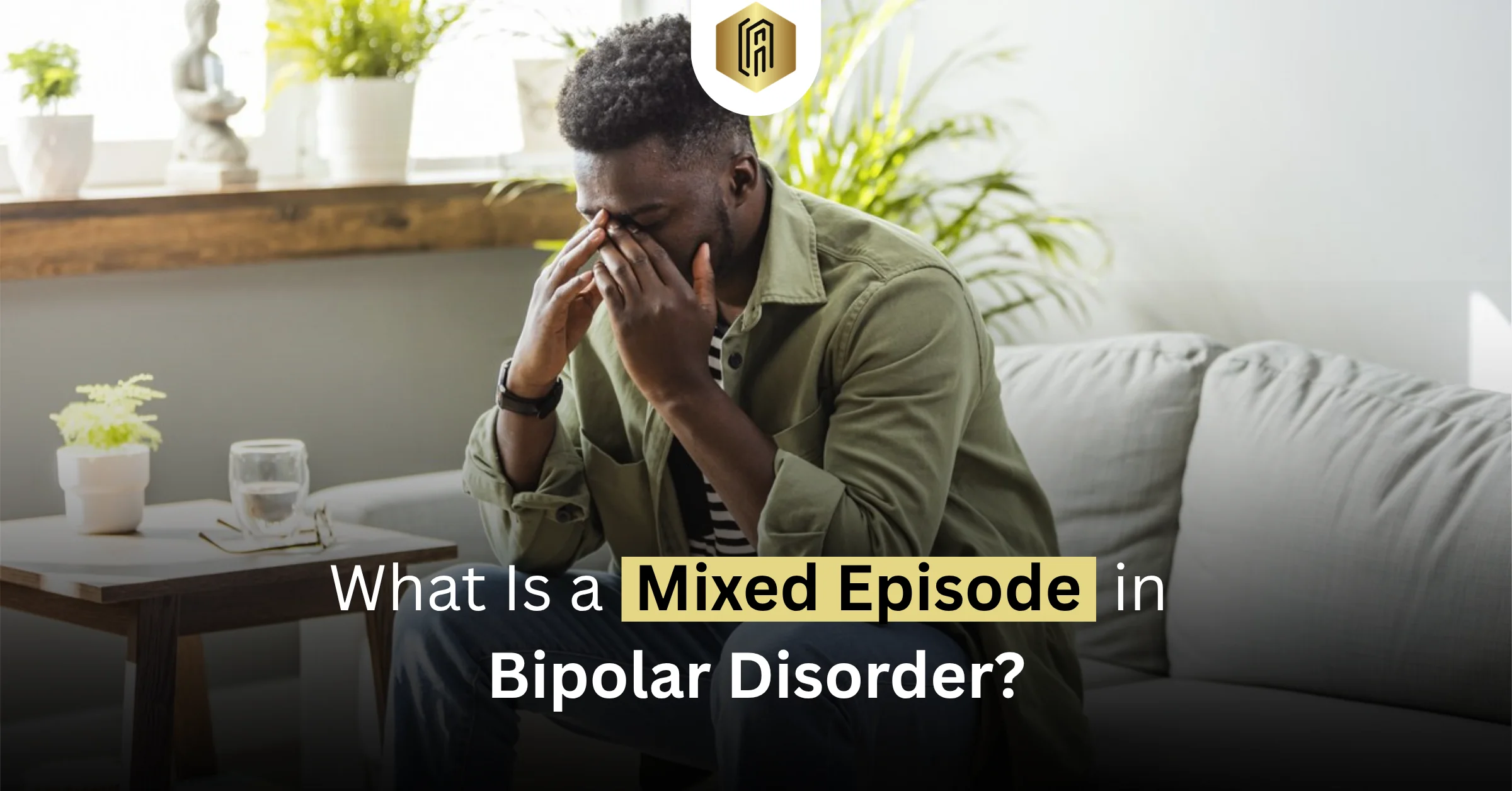
Bipolar disorder causes episodes of depression and episodes of increased or irritable mood (mania or hypomania). Most people perceive these as discrete chapters of highs and then lows, or vice versa. But other people have symptoms at both extremes of the mood spectrum at the same time or one after another very quickly during one episode. This is called a mixed episode, or, in the more current diagnostic terms, a mood episode with mixed features.
Understanding Mixed Features in Bipolar Disorder
In earlier diagnostic systems, a “mixed episode” was defined as meeting full criteria for both a manic episode and a major depressive episode simultaneously. The current guidelines adopt a broader and more clinically helpful concept called mixed features. This means that a person meets full criteria for either a manic/hypomanic episode or a major depressive episode, and for most days of that episode also has numerous symptoms from the opposing pole.
For instance:
- During a manic or hypomanic episode, a person may suffer depressed mood, lack of interest or pleasure, weariness, feelings of worthlessness or guilt, or thoughts of death.
- During a major depressive episode, a person may also have an elevated or expansive mood, increased energy or goal-directed activities, racing thoughts, pressured speech, decreased desire for sleep, or dangerous behaviors.
The essential point is that symptoms of both polarities are present simultaneously or alternate rapidly within the same episode, rather than in two discrete high and low episodes.
What a Mixed Episode Can Feel Like
Mixed features are frequently described as perplexing and intense. This is due to an unusual pairing between mood and energy. The signals cross: High energy doesn’t equal high mood; low energy doesn’t equal bad mood.
Typical experiences include:
- Feeling really sorrowful, despondent, or emotional, as well as restless, irritated, or driven
- Thoughts that are racing, full of self-criticism, concern, or despair rather than big or constructive concepts
- Exhaustion with a restlessness that prevents sitting still or sleeping
- Uncomfortable or irritating rather than useful or joyful increased energy
- A feeling of being “charged but empty” or “activated but heavy”
This combination is sometimes more distressing for people than pure mania or pure depression. The activation that accompanies manic or hypomanic symptoms can enhance the hopelessness of depression and create a particularly uncomfortable state of mind.
Why Recognizing Mixed Features Matters
There are a number of reasons why it is vital to correctly identify mixed characteristics. These presentations may be atypical of conventional bipolar patterns and may be mistaken for other conditions such as agitated depression or anxiety disorders. Since there are symptoms from both poles, therapy procedures that work well for pure sadness or pure mania may not be the greatest fit and can, in some situations, exacerbate symptoms.
Mixed features also suggest a higher level of distress and a greater need for attentive monitoring and targeted support. Early recognition means more appropriate treatment options and better protection of everyday functioning, relationships, and safety.
How Mixed Features Are Identified
The diagnosis is based on meticulous clinical assessment and not on any one test. A psychiatric physician will discuss:
- Describe current and recent mood symptoms in detail
- Sleeping patterns, energy levels, speech and mental processes
- Duration and time of onset of symptoms
- How symptoms impact work, relationships and daily activities
- Episodes and therapy response history
- Any other conditions or substances which may affect the presentation
Consistent symptom observation, feedback from trusted persons where feasible, and an extensive history are useful in distinguishing mixed features from pure mood episodes or other diseases. It is extremely useful to have open discussion about the whole range of experience, both good and bad.
Approaches to Support and Treatment
Management of mixed characteristics usually involves mood stabilization and treatment of both sets of symptoms. Often mood stabilizers and some atypical antipsychotics are used because they can help bring the extremes into balance without making one pole worse than the other. In these instances, antidepressants alone are usually administered cautiously, because they can sometimes lead to increased agitation or activation.
Supportive interventions beyond medicine usually include:
- Safeguarding sleep and regular day-to-day habits that help to regulate biological cycles
- Removing stressors and providing consistent structure
- Therapy strategies directed towards mood management, coping skills, and interpersonal problems
- Close follow-up to evaluate reaction and change strategy as necessary
Treatment is largely individual. What works for one individual may be different for another, and working with a psychiatric physician over time helps to fine-tune the approach.
Practical Tips for Navigating Mixed Features
- Keep a daily symptom diary (mood and energy/activity). The more you watch anything, the more the patterns become evident.
- Maintain a regular sleep/wake schedule if you can. Disruption of sleep may worsen mixed presentations.
- Tell your provider everything that is going on, including any “highs” and “lows” that are happening at the same time, even if they seem to be contradictory.
- Limit alcohol and recreational substances, which can disrupt sleep and mood even more.
- When the going gets tough, rely on reliable help and be forthright about your needs.
If symptoms get worse or you have any safety concerns, please get in touch with us promptly.
These measures do not replace expert care, but can enable you to remain stable while treatment is being optimized.
When to Seek Help
If you are experiencing overlapping high and low symptoms, significant inner conflict between your energy and mood, or increasing trouble functioning, it is necessary to connect with a mental health provider. The most effective treatment for mixed features is individualized, tailored care, not a one-size-fits-all approach.
Ascension Psychiatric Services offers compassionate, individualized evaluation and treatment of bipolar disorder and related mood disorders through easy virtual appointments. We collaborate with patients to interpret difficult presentations and design practical programs to facilitate better stability.
Towards Greater Clarity and Stability
The co-occurrence of manic/hypomanic and depressed symptoms characterizes a mixed episode or a mood episode with mixed features. This can be a confusing and intense experience, but it’s a known and curable pattern in bipolar disorder. Understanding what is happening is the first step in getting the care that fits.
You don’t have to go through these things by yourself. If diagnosed and treated properly, many people have great relief and better function in everyday life.
Ready to talk to a qualified professional about your symptoms? Call Ascension Psychiatric Services today to set up a virtual appointment. We are here to listen and help as you work towards greater stability.
FAQs
Is a mixed episode the same as rapid cycling?
No. Rapid cycling is a term used to describe the experience of shifting frequently between different mood episodes over time. Mixed features are when both poles’ symptoms are present in the same episode.
Can mixed features happen in bipolar II disorder?
Yes. Mixed features can occur with hypomanic or major depressive episodes in bipolar II disorder, just as they can with manic or major depressive episodes in bipolar I disorder.
Why might antidepressants alone be less helpful during mixed features?
Because of the mixed presentation, with activation or manic/hypomanic features with depression, antidepressants used alone can sometimes cause an increase in agitation or energy in unhelpful ways. Treatment usually includes methods to stabilize mood.
This post is solely for educational purposes and does not replace professional medical advice. Always consult with a qualified healthcare provider regarding your particular health needs and treatment options.




No comment