
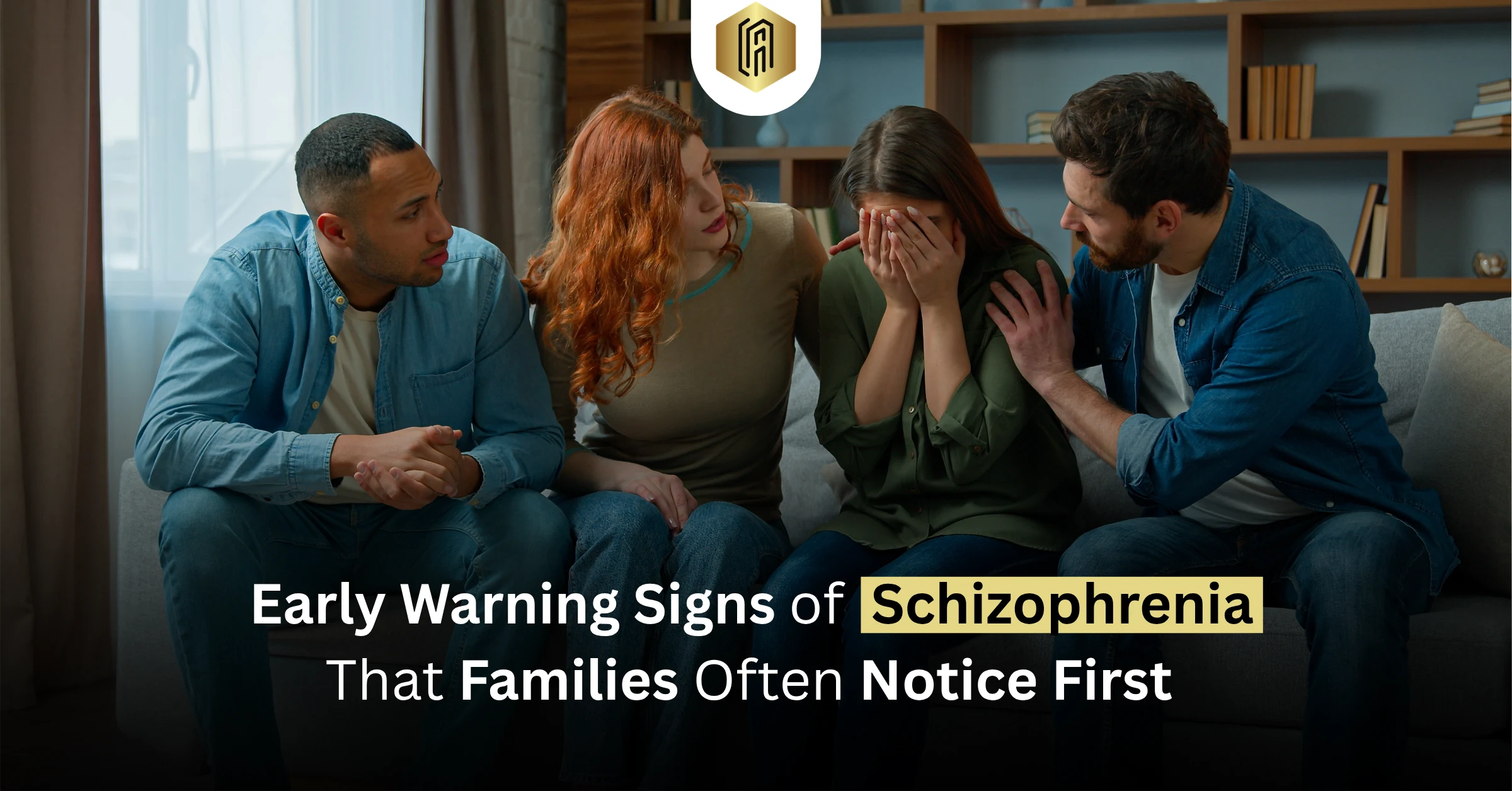
Schizophrenia rarely begins with sudden, dramatic symptoms. For many people, there is a gradual period of change, sometimes lasting months or longer, before clearer signs of psychosis appear. During this early phase, the person themselves may not recognize that anything is wrong. Family members and close friends often notice first that something feels different.
These early changes can be subtle and easy to attribute to stress, adolescence, college life, or other life transitions. Noticing patterns that persist or worsen can help families seek evaluation sooner.
Why Families Notice Changes Before the Person Does
At first, insight is usually limited. The person may think other people are overreacting or that the changes are temporary. Families, however, are more likely to have a longer-term view of the person’s typical personality, habits, and level of functioning. They are more likely to notice a change from the norm: uncharacteristic disengagement, a reduction in performance, or a growing impression that their loved one is becoming more distant.
These are important observations. Getting assessed early doesn’t mean a diagnosis is certain, but it can open the door to support, monitoring, and action if needed.
Social Withdrawal and Reduced Connection
Some of the most typical early changes families notice involve social disengagement. The person may:
- Spend more and more time alone in their room.
- Stop responding to messages or invitations.
- Pull away from friends and family activities they previously enjoyed.
- Seem emotionally distant or hard to approach.
Often, this disengagement goes beyond normal introversion or transient stress. It can seem like the person is becoming harder to reach, even while they are right there.
Decline in School, Work, or Daily Functioning
Another common early warning sign is a significant decline in performance. Families may notice:
- A decline in grades or trouble finishing once-easy assignments.
- Difficulty focusing, organizing duties, or finishing work.
- Loss of interest in goals or activities that used to matter.
- Diminished motivation that seems disproportionate to surrounding conditions.
Such changes may be gradual. What stands out is the contrast with the person’s earlier abilities and drive.
Changes in Sleep, Energy, and Self-Care
Sleep patterns often shift. Some people sleep far more than they usually do; others have trouble falling asleep or staying asleep. Energy may drop, and personal hygiene or daily routines can begin to slip. Families sometimes notice that the individual is less concerned with their appearance, meals, or basic self-care than they used to be.
These changes might not be dramatic at first, but when they continue alongside other changes, they contribute to the overall picture of someone who is functioning differently.
Emotional and Mood Changes
Emotional expression and mood may also change in surprising ways:
- A flattening of facial expression or tone of voice.
- Increased irritation, anxiety, or inexplicable nervousness.
- Low mood or anhedonia (a reduced ability to experience pleasure).
- Mood fluctuations without an obvious cause.
Some families report a sense that their loved one’s emotional responses are no longer appropriate to the context or that the individual seems less present and involved.
Subtle Changes in Thinking and Perception
Before full delusions or hallucinations take hold, thinking and perception may start to change in more subtle ways. Families may notice:
- Greater suspicion or discomfort with others.
- Odd or inflexible thoughts that seem out of character.
- Trouble concentrating, following a conversation, or organizing thoughts.
- Comments suggesting the person is interpreting ordinary events in odd or self-referential ways.
These changes are often mild and sporadic at first. They can be easy to dismiss as stress or overthinking until the pattern becomes clear.
Why These Signs Are Easy to Miss or Misinterpret
Many of the early changes are indistinguishable from depression, anxiety, substance use, trauma responses, or the normal challenges of late adolescence and young adulthood. Usually, a single sign, such as temporary social withdrawal or disrupted sleep, has little or no meaning in and of itself. What is often worrisome is a cluster of changes that persist, progress over time, and represent a clear departure from the person’s baseline.
Families sometimes question themselves, asking whether they are overreacting. Sometimes, having a lingering feeling that something is not quite right can be more useful than waiting for clear-cut symptoms to appear.
Practical Steps for Families
If you notice several of these patterns, consider the following:
- Document specific changes and when they occur. Information about when the withdrawal started, how school or work performance changed, and any unusual comments can help a clinician get the full picture.
- Approach the conversation with care, not accusation. Focus on changes you can observe and concern for the person’s well-being, not labels.
- Encourage a formal evaluation. A psychiatric evaluation can help determine whether the changes are related to a primary psychotic process, another mental illness, or a combination of factors.
- While you’re receiving care, try to maintain basic routines for sleep, nutrition, and daily structure.
- Don’t isolate yourself. Even if the person is withdrawn, family support and open communication are important.
Early consultation with a knowledgeable provider does not commit anyone to a specific diagnosis. It provides an opportunity for careful assessment and timely support.
When to Seek Evaluation
Ongoing social withdrawal, reduced functioning, sleep disruption, emotional changes, and emerging unusual thinking are all signals that professional help may be needed, especially when they occur together and represent a clear change from the person’s previous self. Evaluation is particularly important if there is a family history of psychotic disorders or if symptoms are worsening.
Virtual psychiatric care can help make that first conversation easier. A full assessment considers history, symptoms, functioning, and potential contributing factors to determine the next steps.
Moving Toward Clarity and Support
Schizophrenia’s early warning signs are often subtle and can easily be mistaken for other problems. Families are often the first to notice when things just don’t seem right: withdrawal, declining performance, sleep changes, emotional changes, and unusual thinking. Recognizing these patterns does not mean assuming the worst. It means taking observed changes seriously enough to seek an informed evaluation.
Many people who receive help at the right time get the support they need to alleviate symptoms, reduce distress, and maintain their ability to function. Families who know what to look for can act more confidently and with less delay.
Ascension Psychiatric Services offers compassionate and careful evaluation and treatment for concerns involving thinking, perception, mood, and functioning. Our team, led by Anthony J. Hall, MSN, APRN, PMHNP-BC, provides virtual psychiatric care with an emphasis on straightforward communication, personalized support, and the appropriate involvement of family members.
If you have noticed persistent changes in a loved one that concern you, you do not have to wait for symptoms to become more severe before seeking guidance.
Ready to discuss concerns about early changes in thinking, mood, or functioning? Contact Ascension Psychiatric Services today to schedule a virtual consultation. We’re here to help families and individuals find clarity and appropriate next steps.
Related Posts:
- A Complete Guide to the Different Types and Classifications of Schizophrenia
- Can People with Schizophrenia Live Independently with Treatment?
- Can Therapy Like CBT Help with the Social Challenges of Schizophrenia?
FAQs
Do these early signs always mean someone will develop schizophrenia?
No. Many of these changes can occur with other mental health conditions, stress, or developmental transitions. A professional evaluation is needed to understand the full picture and determine appropriate support.
Why doesn’t the person notice the changes themselves?
Insight is often limited in the early phase. The person may feel that others are overreacting or that the changes are temporary or caused by external factors. Families who know the person’s baseline are often better at noticing the difference.
What should families do if they are concerned?
Note any changes, be thoughtful in your conversations, and consider a psychiatric evaluation. Early assessment can shed light on what’s going on and open the door to support without the need for a definite diagnosis right away.
This article is for educational purposes only and is not a substitute for professional medical advice. Always consult with a qualified healthcare provider regarding your specific health needs and treatment options.





No comment