
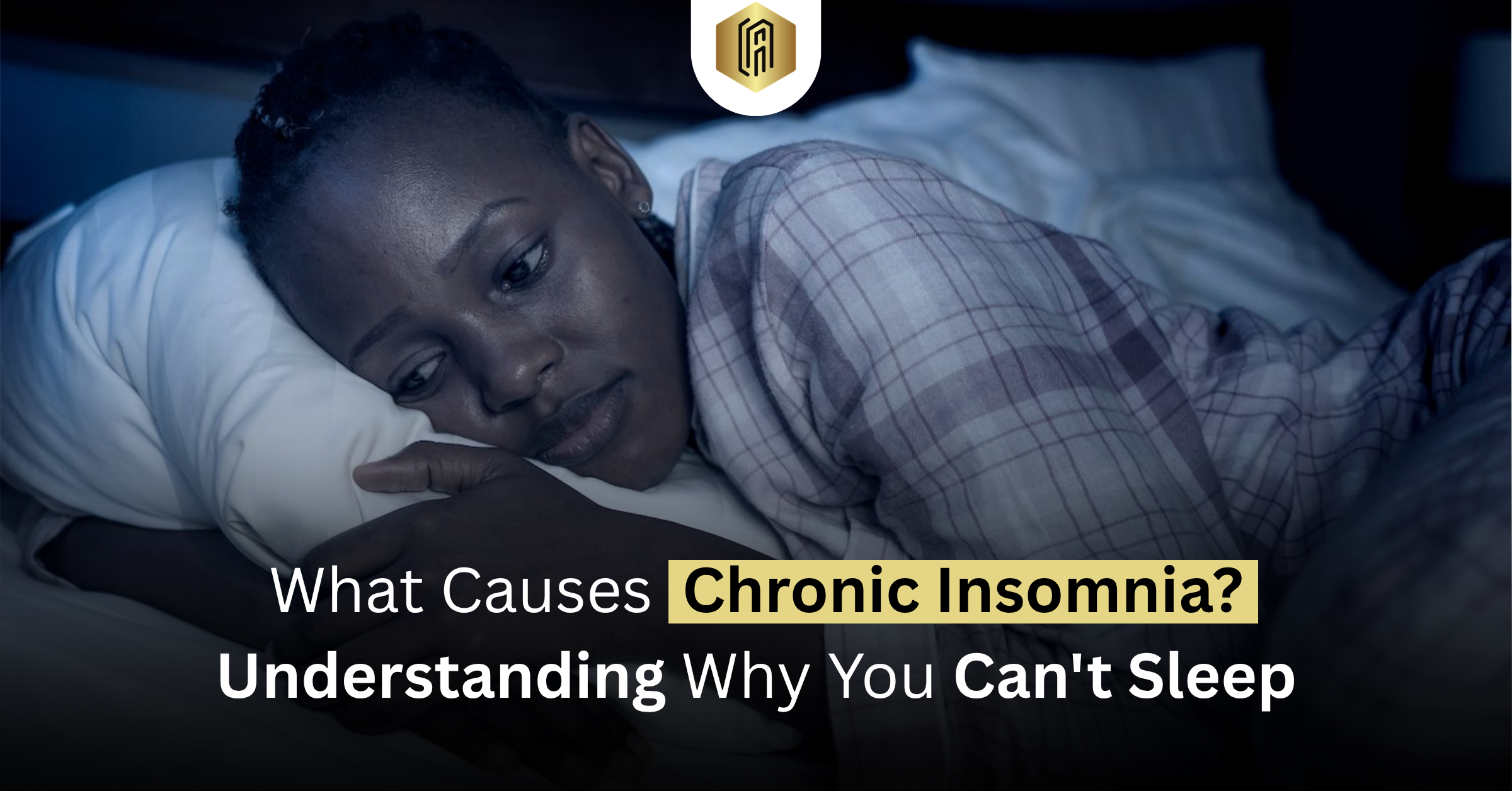
Struggling to fall asleep or stay asleep night after night is incredibly frustrating. If you’ve been experiencing bad sleep for weeks or months, you’re not alone, and it’s not simply “in your head.” Chronic insomnia is a serious medical condition that affects millions of individuals and can have a severe influence on mood, energy, focus, and general health.
What Is Chronic Insomnia?
Chronic insomnia is more than the occasional sleepless night. It involves persistent problems with falling asleep, staying asleep, or getting up too early, at least several times a week for three months or more. The result is usually daytime fatigue, mood changes that affect your quality of life, irritability, or trouble concentrating.
While short-term sleep problems will pass on their own, chronic insomnia is typically a mix of things that keeps the cycle in motion. The good news is that once you’ve identified the contributing factors, treatments are much more targeted and effective.
The Bidirectional Link Between Sleep and Mental Health
The link between mental health and sleep is bidirectional. Anxiety, depression, and stress are all common causes of sleep problems, and chronic sleep problems can worsen or even precipitate symptoms of mental illness. It’s a cycle that so many people get caught up in.
For example, when you have anxiety, you often get racing thoughts when you try to go to bed, and you can’t relax. Depression can cause you to wake up early in the morning or feel overly tired, which will disturb your sleep rhythm. At our practice, we frequently see that it is better to treat sleep and mental health together to obtain better outcomes rather than separately.
Medical and Physical Health Conditions
Many physical health problems can interfere with comfortable sleep. Chronic pain could be from arthritis or back problems. Breathing problems such as asthma, heartburn, or hormonal changes after menopause are just a few possibilities. Even if they seem completely unrelated, an overactive thyroid or other medications can also be contributing factors.
If you have an underlying medical condition, treating it successfully will often improve sleep as well. That’s why a thorough evaluation is so crucial; ruling out or addressing physical causes makes a tremendous difference.
Lifestyle and Habit-Related Factors
Daily routines can be silently sabotaging your sleep, and you might not even know it. Common offenders include inconsistent sleep routines, too much screen time before bed, coffee late in the day, or large meals in the evening. Your body’s normal rhythm can be disrupted by shift employment, frequent travel, or even long naps during the day.
The good news is that these factors are often the most modifiable. Small changes to your daily routine can result in improved sleep conditions and help you break unhelpful patterns that may have developed over time.
Stress, Life Events, and Hyperarousal
Chronic sleep problems are often caused by stress. Problems with your job, money, family, or major life changes can keep your mind going long after the lights are out. This can lead to a state of hyperarousal (sometimes called hyperarousal) where your body and brain are unable to relax even when you’re physically tired.
Learning to manage stress through relaxation techniques, therapy, or other strategies can help calm down this overactive response and make sleep feel more natural again.
Other Contributing Factors
Insomnia can often be the result of a mix of factors: genetic predispositions, alterations in sleep patterns associated with aging, or even specific substances like alcohol (which might aid in falling asleep, but can often lead to fragmented sleep later on in the night). Other environmental factors such as noise, light, or an uncomfortable bedroom can also contribute to the problem.
Everyone’s situation is different, so it’s best to take a personalized approach. What keeps one individual awake at night may be completely different from the next.
Practical Tips to Address the Root Causes
Here are some ways you may start supporting better sleep while you wait to work with a professional:
- Keep a regular sleep pattern, even on weekends.
- Establish a relaxing nighttime routine to communicate to your body that it’s time to go to sleep.
- Avoid coffee and large meals in the afternoon and evening.
- Keep your bedroom dark, cool, and quiet.
- At least an hour before bed, cut down on screen exposure.
- Incorporate daily movement and stress reduction activities like deep breathing or moderate stretching.
These habits aren’t going to cure every case on their own, but often they enhance other treatments.
When to Seek Professional Help
If insomnia is affecting your everyday life, mood, or safety (e.g., driving), it’s time to reach out. A psychiatric professional can assist in pinpointing the unique factors in your situation and build a personalized approach that could include treatment, medication management if appropriate, or collaboration with other doctors.
Sleep issues are closely tied to mental health and, therefore, we at Ascension Psychiatric Services take a compassionate, whole-person approach to sleep issues.
Moving Toward Better Rest
Chronic insomnia shouldn’t take up your evenings or your days. By understanding the probable causes, whether it’s stress, mental health, medical concerns, or lifestyle, you can take empowered steps towards peaceful sleep and better well-being.
If you’re experiencing sleepless nights, know that there is help and effective remedies are available. We’re here to provide you with one-on-one care through simple virtual sessions.
Ready for improved sleep? Call Ascension Psychiatric Services today to schedule your consultation. Let’s discover together what’s waking you up and create a plan for restful, restorative nights.
FAQs
Is chronic insomnia always caused by stress or anxiety?
Not necessarily. Stress and mental health are a key influence for a lot of people, but there can also be physical conditions, drugs, lifestyle choices, or a mix of variables that can be major contributors. A professional assessment will help to determine what is specific to your situation.
Can changing my habits really fix long-term insomnia?
Yes, for a lot of people. Correcting underlying problems and improving sleep practices (commonly referred to as sleep hygiene) can make a big difference. In some circumstances, cognitive behavioral therapy for insomnia (CBT-I) or other tailored support can produce long-term results without relying only on medication.





No comment