
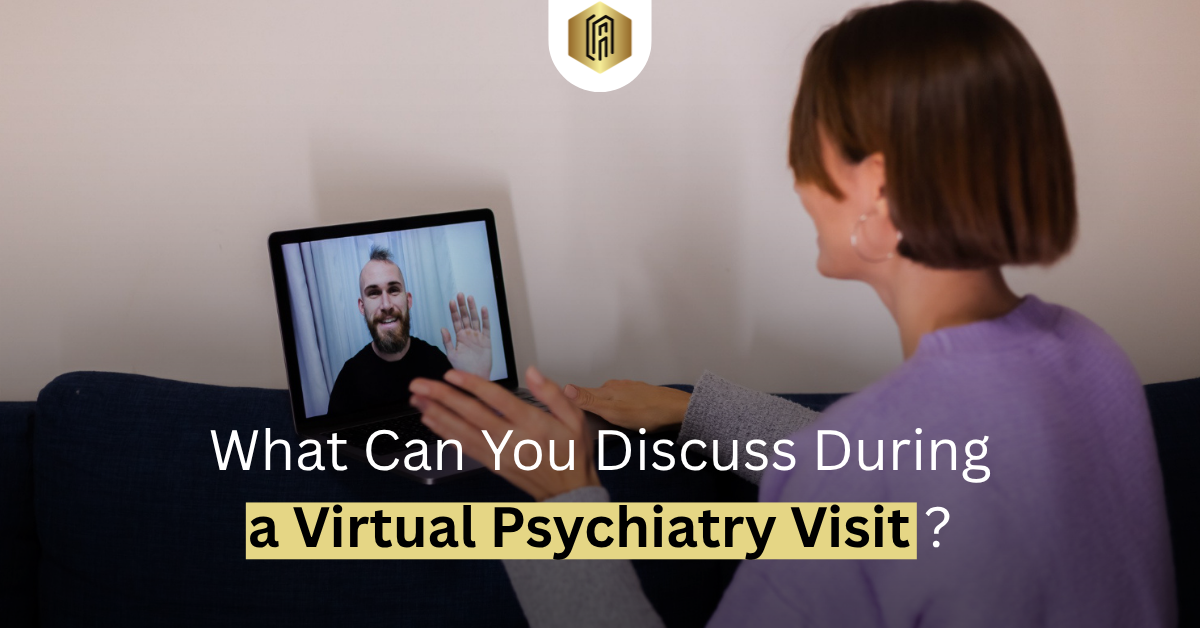
Starting or continuing your mental health care through virtual visits may feel strange. Many people are curious about what topics are appropriate to discuss, how comprehensive they should be, or whether the talk would feel as complete as an in-person meeting. On the bright side, virtual psychiatric meetings are structured to touch on the same significant topics as regular office visits, simply from the comfort and privacy of your own home. We’ll walk through the kind of issues that are often asked about, so you may feel more prepared and secure.
Understanding the Purpose of a Virtual Psychiatry Visit
A virtual psychiatry visit is a secure video appointment to evaluate, diagnose, and treat mental health conditions. It’s a good time to talk about symptoms, history, medication, lifestyle factors, and goals. The format offers the same standards of clinical care as in-person visits, but also removes barriers such as travel time or waiting rooms.
These visits help with many conditions, including depression, anxiety, ADHD, OCD, bipolar disorder, insomnia, and more. The dialogue is collaborative; your provider listens closely, asks clarifying questions, and works with you to create or fine-tune a treatment plan that works for your life.
Current Symptoms and How They Affect Daily Life
One of the most important parts of any visit is to describe what you are seeing and experiencing right now. You may talk about:
- Changes in mood, including a depressed mood, irritability, or extreme highs and lows
- Anxiety, worry, panic, or tension in the body
- Difficulty paying attention, concentrating, or restlessness
- Sleep problems (difficulty falling asleep, staying asleep, or waking up unrefreshed)
- Changes in energy, appetite, or drive
- Intrusive thoughts, repetitive behaviors, or difficulty concentrating
- How these symptoms affect work, school, relationships, or self-care
Being specific helps your provider get the whole picture. Details such as when symptoms began, what improves or worsens them, and how they affect daily living are critical in deciding on treatment.
Personal and Family Mental Health History
Sharing relevant history allows your provider to see patterns and avoid approaches that have not worked well in the past. Topics often include:
- Previous mental health diagnoses or periods of significant distress
- Past therapy experiences and what felt helpful or unhelpful
- Prior medications, including what you tried, how long you took them, benefits you noticed, and any side effects
- Family history of mental health conditions, substance use, or related challenges
- Any hospitalizations or periods of crisis
You do not need to have every detail memorized. A general overview is useful, and your provider can guide the conversation with questions.
Current Medications, Supplements, and Physical Health
Psychiatric visits often focus on medication management. You can talk about:
- All current prescription medications and dosages
- Over-the-counter medications, vitamins, or herbal supplements
- How current psychiatric medications are working (or failing)
- Side effects or concerns regarding current treatments
- Questions about starting, adjusting, or changing a medication
- Any pertinent physical health issues that may affect treatment decisions
Being honest about what you are taking helps to ensure it is safe and effective. Your provider can also discuss possible interactions and monitoring needs.
Lifestyle Factors and Daily Routines
Mental wellness does not exist in isolation from the rest of life. Virtual visits usually include discussion of:
- Sleep and rest habits
- Stress levels and life stressors
- Eating habits, level of physical activity and daily routine
- Alcohol, cannabis or other substance use
- Work, study or caring responsibilities
- Social support and social relationships
These details can assist in building a fuller picture of what may be contributing to symptoms, and what supportive changes may help.
Treatment Goals and Preferences
Your priorities matter. You could say what you want to get out of care, for example:
- Feeling less overwhelmed or more grounded
- Increased concentration or sleep
- Managing pharmaceutical side effects
- Improve coping skills
- Better understanding of diagnosis
- Preferences for medicine versus non-medication approaches
Discussing goals early on helps to ensure that the treatment plan is aligned with what’s most important to you. It allows us to revisit and revise those goals throughout time, too.
Questions, Concerns, and Practical Matters
Virtual visits are a two-way dialogue. Please do not hesitate to ask questions about the following:
- How a recommended medication works and what to expect
- Potential adverse effects and coping mechanisms
- Timeline for noticing benefits
- Between visits and having follow-ups scheduled
- How to contact the practice if you have issues
- Aspects of privacy and technology in virtual care
No question is trivial. Clear information makes you feel more educated and active in your care.
Preparing for a Productive Visit
A few simple measures can help make the talk go more smoothly:
- Find a quiet, private place with a good internet connection.
- Carry a list of current medications and primary concerns.
- Note recent changes in symptoms or life.
- Write down questions so you don’t forget to ask them during the appointment.
- Be prepared to address issues you have seen and positive shifts.
Coming prepared will enable you to get the most out of your time together.
What Happens After the Discussion
Usually at the end of the visit, you and your provider will discuss future measures. This may involve prescription changes, lifestyle suggestions, referrals for therapy if needed, test work, or a follow-up consultation. Where appropriate, prescriptions are normally dispatched electronically to your chosen pharmacy.
By continuing to make visits, the plan may be refined, and there can be an open discussion about how things are going.
Taking the Next Step with Confidence
Virtual psychiatry appointments provide a convenient, confidential space to discuss all things mental health: your present symptoms, your history, medications, lifestyle, and objectives. The conversation is finished, collaborative, and focused on what is most important to you.
Ascension Psychiatric Services offers virtual visits that are convenient and supportive of quality psychiatric care. Our team, led by Anthony J. Hall, MSN, APRN, PMHNP-BC, works with patients in several states to help manage depression, anxiety, ADHD, OCD, bipolar disorder, and more.
If you’ve been wondering if a virtual visit may meet your needs, know that many of the things that feel most important to discuss can be fully discussed in this format.
Ready to start the conversation? Call Ascension Psychiatric Services today to book a virtual appointment. We’re here to listen and to assist you in taking steps that matter for greater mental health.
FAQs
Is a virtual psychiatry visit as thorough as an in-person one?
Yes. Virtual visits utilize secure video technology but address the same essential topics of symptoms, history, medications, lifestyle, and treatment planning. The clinical content is still broad.
Can I talk about medication side effects or changes during a virtual visit?
Yes. A lot of appointments are spent talking about how the meds are performing, any side effects, and what changes might be made.
What if I feel nervous about opening up on video?
That’s entirely understandable. Many people feel more at ease as time goes on. You can begin with whatever feels doable, and your provider will help create a safe space for the conversation.
This information is intended for educational purposes and is not a substitute for professional medical advice. Always consult with a qualified healthcare expert regarding your individual health needs and treatment alternatives.






No comment