
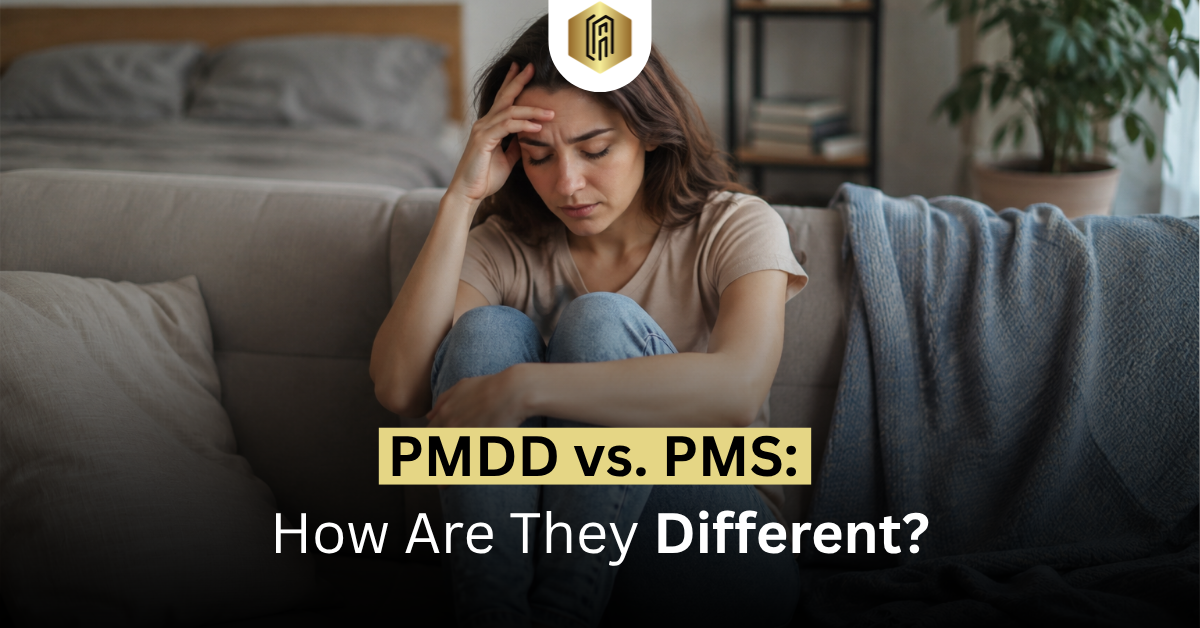
Many people who get periods experience physical and emotional changes as their period approaches. Bloating, sore breasts, weariness, irritability, or mood swings are prevalent. Some people get mild symptoms that are tolerable. For some, they are so intense that they interfere with work, relationships, and everyday life.
Understanding the distinction between premenstrual syndrome (PMS) and premenstrual dysphoric disorder (PMDD) might help you identify what you’re feeling and get the treatment you need. We commonly see patients at Ascension Psychiatric Services experiencing these recurrent mental and physical changes. Let’s explore how PMS and PMDD are similar and different, and practical ways that can help.
What Is Premenstrual Syndrome (PMS)?
PMS stands for premenstrual syndrome and is a mix of physical and mental symptoms that occur in the luteal phase of the menstrual cycle, which is the time between ovulation and the start of your period. When bleeding starts, or within a few days of it starting, these symptoms tend to go away.
Some of the more common ones are bloating, breast tenderness or swelling, headaches, exhaustion, changes in appetite or food cravings, difficulties in sleep, moderate irritability, and mood irregularities. PMS symptoms can be painful, but they are often not severe enough to interfere with everyday responsibilities. Many people control them with lifestyle changes, over-the-counter medicines, and basic self-care practices.
PMS is on a spectrum. Some people have few mild symptoms, and others may feel more affected. The main hallmarks are the cyclical timing and that the symptoms disappear quite rapidly once the period starts.
What Is Premenstrual Dysphoric Disorder (PMDD)?
Premenstrual dysphoric disorder PMDD is a more serious disorder that has physical symptoms, in addition to major emotional and mental issues. Mental health experts utilize diagnostic guidelines that classify it as a depressive condition. The emotional symptoms of PMDD can be overpowering and often interfere with your work, school, social activities, or relationships.
PMDD has prominent core mood symptoms. These can include noticeable irritability or aggression, extreme mood fluctuations, feelings of despair or hopelessness, or increased worry and tension. Physical symptoms comparable to those of PMS may also occur, but it is the emotional intensity that often characterizes PMDD.
The symptoms follow the same cyclical pattern as PMS, occurring in the week or so before menstruation and improving immediately after the onset of bleeding, although they are more severe and disruptive.
Key Differences Between PMS and PMDD
PMS and PMDD can happen simultaneously and have some common symptoms, but there are key differences between the two:
Severity of emotional symptoms
PMS may include small mood swings and irritability. PMDD involves more severe mood changes, such as extreme sorrow, irritation like fury, anxiety that feels out of control, or feeling overwhelmed.
Impact on daily functioning
With PMS, people are usually able to resume their normal activities even if they are uncomfortable. Symptoms of PMDD often cause significant disruption to work performance, relationships, or the ability to engage in normal activities.
Diagnostic criteria
PMS is usually diagnosed when a person has cyclical symptoms that cause considerable concern. PMDD is more precise in that a specified number of symptoms (one of which must be a core mood symptom) are present in most cycles, are associated with severe distress or impairment, and are validated by prospective tracking.
Nature of the condition
PMS is generally considered a group of premenstrual symptoms. PMDD is a mood condition marked by an exaggerated sensitivity to the typical hormonal variations of the menstrual cycle.
Knowing these differences can help prevent the all-too-common experience of having severe symptoms dismissed as ‘just PMS.’
Shared Features of PMS and PMDD
Both are related to the menstrual cycle and generally clear up or get better when menstruation begins. Both can also lead to physical symptoms such as bloating, breast tenderness, exhaustion, headaches, and changes in sleep or appetite. Both are cyclic (present in the luteal phase, largely missing in the follicular phase).
Because the timing is so important, keeping a simple symptom diary over a couple of cycles can provide valuable clarity for you and your healthcare provider.
How Diagnosis Works
There is no blood test or scan that will identify PMS or PMDD. Instead, they focus on a full history of the symptoms and the timing, severity, and impact on life. A prospective daily symptom log for at least 2 menstrual cycles is particularly useful and is often recommended to determine the cyclical pattern needed to diagnose PMDD.
Your provider will also consider other medical issues that need to be ruled out or whether symptoms may be an exacerbation of another condition (such as depression or anxiety that worsens premenstrually). A key aspect of the assessment is to talk about how your symptoms interfere with your daily life.
Approaches to Management and Relief
Management strategies depend on severity and individual needs.
Lifestyle modifications often assist milder PMS symptoms. For many women, routine exercise, sleep, stress management, good nutrition, and cutting back on alcohol or caffeine during the premenstrual window can go a long way. You can try some over-the-counter pain medications for the physical ache.
In cases of more severe symptoms or when criteria for PMDD are met, further treatments are often considered. Selective serotonin reuptake inhibitors (SSRIs) are widely used, and some women may take them constantly or solely during the luteal phase. Some people may benefit from hormonal contraceptives as they reduce hormonal swings. Approaches that target mood management and coping skills may also be useful. Sometimes a combination of tactics works best.
A psychiatric provider can help evaluate which options fit your specific situation and monitor progress over time.
Practical Tips for Tracking and Self-Support
- Try keeping a simple daily journal of physical symptoms, mood, energy, and impact of symptoms on your activities. Note the beginning and end of your period.
- Sleep and mild activity are important, especially in the second half of your cycle.
- Try stress-management tactics such as deep breathing, quick mindfulness exercises, or time outside.
- Talk to individuals you trust about what you are going through, so they can understand and offer practical support.
- If your symptoms are severe, persistent, or interfering with your life, seek expert help.
Tracking gives specific information to communicate with a provider and can be empowering in and of itself.
When to Seek Professional Support
If your premenstrual symptoms appear severe, last longer than usual, involve intense sadness or irritability, or interfere with your functioning, it could be worth checking in with a healthcare professional. Early assessment will allow you to gain more insight and relief. A psychiatric mental health professional can take into account the emotional and physical issues and work with you to design a tailored plan for you.
At Ascension Psychiatric Services, we offer compassionate, individualized care through virtual visits. We know that the cyclical nature of the symptoms can impair mental health and day-to-day living, and we work with our patients to find techniques that really make a difference.
Finding Clarity and Relief
The menstrual cycle is related to both PMS and PMDD, but the severity and effect are very different. Recognizing if your experience is more akin to moderate premenstrual symptoms or to the more severe pattern of PMDD is a critical step to proper support.
You don’t have to face the worst of cycle symptoms alone. Many people find successful ways to lessen distress and recover a stronger feeling of stability across their cycle with correct information, symptom tracking, and expert help.
Looking for help with premenstrual mood or physical symptoms? Call Ascension Psychiatric Services now to book a consultation. We’re here to help you comprehend what you are going through and move to better well-being.
FAQs
Can someone have both PMS and PMDD symptoms?
PMDD contains many of the physical symptoms of PMS, but also includes more severe mental issues. The difference is more one of degree, quantity of symptoms, and level of functional impairment, rather than entirely different lists of symptoms.
Does tracking symptoms really help?
Yes. Daily prospective tracking over a few cycles is one of the most useful techniques to clarify if symptoms follow a definite premenstrual pattern, and to guide diagnosis and treatment decisions.
Is PMDD just severe PMS?
PMDD is frequently called a severe variant of premenstrual symptoms; however, it is considered a unique mood disorder with its own diagnostic criteria. Some dismiss it as “just bad PMS,” which can delay needed care.
This content is solely for educational purposes. It is not a substitute for professional medical advice. Always seek the advice of a trained healthcare expert regarding your health concerns and treatment alternatives.





No comment