
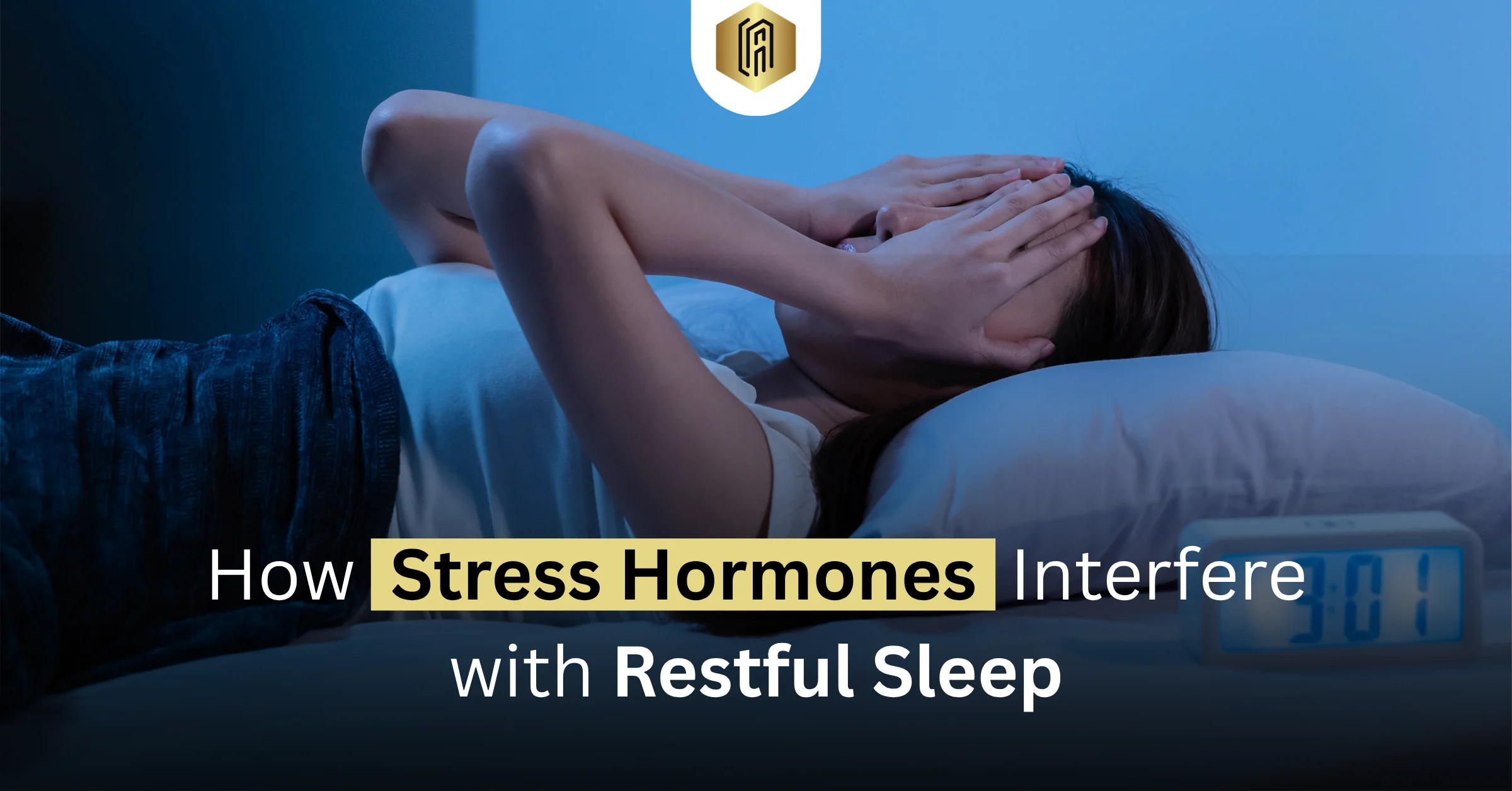
Many people experience the same frustrating pattern: When nighttime comes, they feel fatigued, but when they finally get into bed, their mind stays alert, their body feels rigid, and sleep comes slowly or not at all. Others go to sleep but wake up several times throughout the night. A big part of this experience is the interaction of stress hormones with the systems that govern sleep.
The Normal Rhythm of Stress Hormones
Cortisol is the main stress hormone generated by the adrenal glands. In a well-functioning system, cortisol is released in a predictable daily cycle intimately connected to the body’s internal clock
In general, cortisol tends to be higher in the early morning. The rise this morning helps to enhance alertness, to mobilize energy, and to prepare the body for the demands of the day. Levels decrease slowly during the day. The lowest levels of cortisol are in the evening and early night. The decline produces the physiological conditions that allow drowsiness to take over and deeper phases of sleep to occur.
The so-called sleep hormone melatonin functions in the opposite way. Its production rises during the evening, as light fades, helping to usher you into sleep. If cortisol lowers at the correct time, it can allow melatonin to rise more efficiently. The two systems typically work together.
How Chronic Stress Changes the Pattern
When stress is chronic, or long-term, the system that makes cortisol (the hypothalamic-pituitary-adrenal axis) may remain on longer than it should. Cortisol may not fall gradually in the evening but rather stay elevated or decline more slowly.
High cortisol at night puts the body in a state of physiological alertness. The body is still getting messages that it needs to be ready, not to wind down. Even when you are weary physically, it can be more difficult to get to sleep. It may also result in lighter, more fragmented sleep with more frequent awakenings.
With time, this disruption can flatten the overall daily cortisol curve. The healthy contrast between a high morning peak and a low midnight trough becomes less clear. The outcome is typically daytime tiredness and midnight wakefulness, what many call the “tired but wired” feeling.
The Impact on Sleep Quality
The ongoing presence of stress hormones at night can have an impact on several aspects of sleep:
- Trouble falling asleep when you feel tired
- Frequent short awakenings disrupting sleep cycles
- Reduced amount of time spent in deeper, more restorative stages of sleep
- Feeling as if you haven’t rested enough even when you’ve spent sufficient time in bed
- The next day: fog, grumpiness, or low energy
Poor sleep then feeds into the stress system. Broken or lack of sleep can also cause the rhythm to not reset and increase cortisol levels the next day. This leads to a self-reinforcing cycle that can be increasingly difficult to break without targeted support.
The Role of Mental Health Conditions
Anxiety, depression, and other psychiatric conditions are frequently associated with increased or dysregulated stress responses. Racing thoughts, worry, and emotional tension keep the nervous system on. This prolonged activation makes it more likely that cortisol will remain elevated into the evening hours.
Sometimes the stress hormones can interfere with sleep and actually exacerbate the symptoms of mental health issues, and that adds an extra layer to the cycle. Often, treating both the sleep pattern and the underlying stress or mood issues is better than treating either one alone.
Practical Ways to Support Healthier Hormone Rhythms
You can’t directly control cortisol levels, but your everyday routines have a powerful impact on the timing and magnitude of the stress reaction. Useful approaches include:
- Keeping a constant wake time every day, even on weekends. A regular wake time is one of the greatest cues to reset the daily cortisol cycle.
- Expose yourself to natural light in the morning. Morning light can help boost the cortisol awakening response and support a healthier evening decline.
- Establish a wind-down period during the evening. Dim lights, less screen time, and soothing activities help send the signal to the nervous system that it is ok to move out of an alert state.
- Managing stimulants late in the day. Caffeine, vigorous exertion, or emotional chats just before bedtime may prolong physiological arousal.
- Having brief recovery practices in the day. Short walks, quiet times, or even a few calm breaths can prevent stress from building up into the evening.
- Maintain sleep opportunity. By sleeping and waking more or less at the same time, it gives the body a better foundation for when hormones should be released.
These tactics function best when done regularly, not perfectly. Little signals, repeated often, are better than serious attempts, occasionally.
When Professional Support Can Help
If sleep difficulties have persisted despite good habits, or if they occur alongside significant anxiety, low mood, or other mental health symptoms, a professional evaluation can be valuable. A psychiatric provider can help determine whether stress hormone dysregulation is linked to an underlying condition and can guide appropriate next steps. These may include therapy approaches that reduce hyperarousal, medication when indicated, or further assessment of sleep patterns.
Virtual visits make it possible to discuss these concerns conveniently and develop a plan tailored to your situation.
Restoring Balance Over Time
Stress hormones are not the enemy; they are necessary to meet obstacles and to get the day going energetically. The problem is when they are out of sync with the body’s desire for rest. If it stays chronically high at night, it disrupts the natural transition into sleep and decreases the restorative quality of the sleep that does occur.
Most people can gradually reestablish better alignment by supporting a clearer daily rhythm with consistent schedules, morning light, evening wind-down techniques, and attention to underlying stress or mood difficulties. Many people progress slowly, although improvements in sleep and daytime functioning are feasible.
At Ascension Psychiatric Services, we know how stress, hormones, sleep, and mental health all interact. We are a team led by Anthony J. Hall, MSN, APRN, PMHNP-BC, providing virtual psychiatric care that practically and individually supports these linked elements.
If you’ve fallen into a practice of staying up late to work but then feeling tired during the day, you don’t have to keep pushing through it alone. Recognizing the function of stress hormones is a good place to begin to make significant change.
Looking to treat sleep problems associated with mental health and stress? Contact Ascension Psychiatric Services today to schedule your consultation. We’re here to help you find your way to more restorative slumber and better daytime equilibrium.
FAQs
Can stress hormones really keep me awake even when I feel exhausted?
Yes. Elevated nighttime cortisol levels stimulate physiological wakefulness that can overpower sensations of physical exhaustion, making it more difficult for the brain and body to enter sleep mode.
Does poor sleep make stress hormones worse the next day?
It usually does. Not sleeping enough or sleeping badly might cause the amount of cortisol the following day to be too high or poorly controlled. This perpetuates the cycle of feeling tired during the day and being over-alert at night.
How long does it take to notice improvements with better routines?
Most people start to see minor changes in sleep onset or awakenings during the night within a few weeks of consistent wake times, morning light, and evening wind-down activities. Everyone is different. If difficulties persist, expert help is recommended.
This information is for educational purposes only and is not a substitute for professional medical advice, diagnosis, or treatment. Always contact your physician or other certified health provider with any questions you may have concerning a medical condition.






No comment