
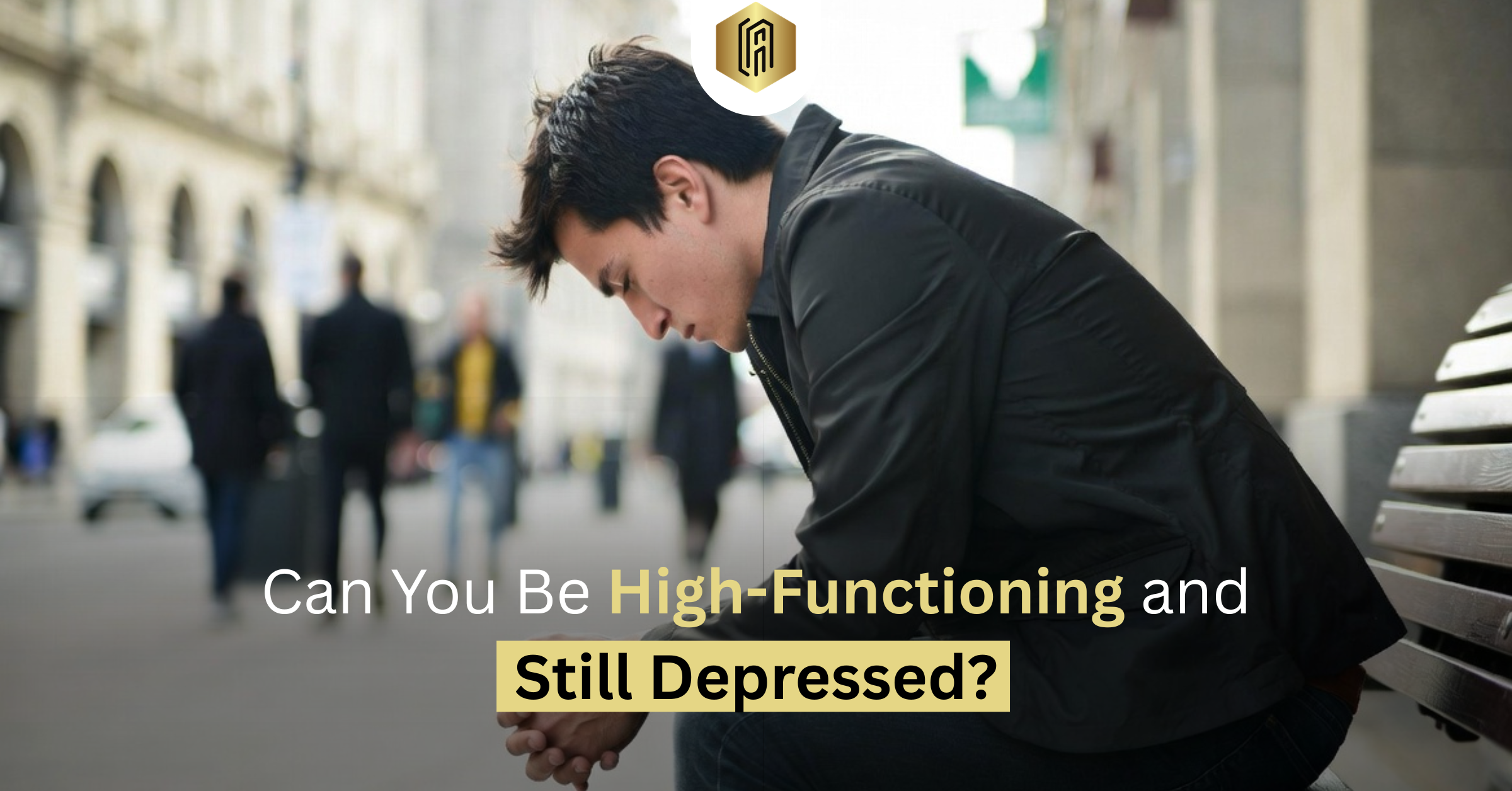
You may be working on a daily basis, taking care of your duties, and presenting yourself to others. On the surface, all might appear utterly normal- even prosperous.
Yes, it is possible to be a high-functioning state and feel depressed. The high-functioning depression most commonly observed in many individuals leads to a state of life in which individuals still lead normal lives but experience emotional exhaustion, fatigue, or lack of motivation.
This is not an unusual experience, and people are not aware of it, as they can see the iceberg but not what lies beneath the water.
What Is High-Functioning Depression?
High-functioning depression is a type of depression in which an individual manages to cope with their daily responsibilities but silently carries on with the symptoms.
You may still:
- Go to work or school
- Take care of your home or family
- Stay socially active
However, inside of it, it may seem as though:
- Most of the time, low energy
- Emotional numbness
- Constant mental exhaustion
It’s not about being “less depressed,” it’s about depression that is harder to see.
Common Signs of High-Functioning Depression
Most individuals are not aware of the signs initially because they may feel like normal stress.
Common signs include:
- Feeling fatigued despite taking rest
- Loss of pleasure in things previously enjoyed
- Emotional flatness or numbness
- Being overly self-critical or perfectionistic
- Withdrawal of hobbies or social life
- Sleep or appetite changes
These are symptoms that can accumulate gradually, and hence they are usually overlooked.
Why Does High-Functioning Depression Happen?
High-functioning depression is the one that is usually missed since the individual may be on the outside, leading a seemingly good life. They can carry on with their work, social interactions, and daily responsibilities, which can make it difficult for others, and even the individual themselves, to recognize that there is a problem.
It is also a common belief among many that depression is always severe or disabling, which makes them dismiss their own symptoms as stress or burnout. This may take time to slow down assistance, despite the emotional stress still accumulating. This is why it is important to be aware of the subtle signs. The fact that you are operational does not imply that you are not struggling, and that support can still have a significant impact.
Why Does High-Functioning Depression Happen?
There isn’t just one cause. Several factors can cause it:
1.Brain Chemistry Changes
There can be imbalanced mood-regulating chemicals, such as serotonin and dopamine, that influence the energy, motivation, and emotional response.
2.Continuous Stress or Pressure
As stress or pressure is high in the workplace or household, emotional burnout may result in the long run.
3. Personality and Coping Style
Responsible, driven, or perfectionistic individuals can carry on operating even when they are battling within.
4. Past Experiences
How depression presents itself can be influenced by stressful or difficult life events, making it quieter but more persistent.
How It Affects Daily Life
The effect is felt even when you are still functioning. You may notice:
- Chores are getting to feel more difficult
- Decreased enjoyment in everyday life
- Difficulty focusing
- Not being attached to others
In the long run, this may have an impact on your relationship, work, and general well-being. This persistent trying to continue working can result in burnout over time. You can begin to feel out of touch with others as well as with yourself, and find it more difficult to feel here or present in ordinary life.
What High-Functioning Depression Can Feel Like Day to Day
High-functioning depression does not necessarily feel serious; it can manifest itself in quiet, everyday forms. You may wake up feeling exhausted even after spending a night and doing your routine on autopilot. Things are accomplished, though not as easily as they were formerly. You might end up pushing through tasks during the day with mental exhaustion. Even simple choices are overwhelming, and the situations that ought to be full of fun might appear one-dimensional or distant.
At the end of the day, one usually feels totally drained, not just physically, but emotionally as well. Although it may seem like you are okay to others, it is as if you are always running out of energy internally.
It is this cycle that is what makes the high-functioning depression so hard to detect; it is so incorporated into everyday life and is silently eating it up.
When Should You Be Concerned?
You might be required to take a little more notice in case:
- The feeling of exhaustion doesn’t go away
- You feel emotionally numb for weeks
- Everyday chores begin to pile up
- It seems like you are merely going through the motions
- Relationships start to be influenced by your mood
These are not the indications to neglect; they are the clues that show that support can be of assistance.
How High-Functioning Depression Can Be Managed
High-functioning depression is controllable, particularly under the proper guidance. Helpful steps include:
- Developing a daily routine
- Regular sleep and exposure to light
- Taking time to relax without feeling guilty
- Conversation with a mental health expert
Through therapy and, in a few instances, medication can be used to improve mood, energy, and overall functioning.
Can You Recover from High-Functioning Depression?
Yes, lots of individuals become much better when they make themselves aware of what is going on and get help. Tiny, regular adjustments, as well as expert advice, can assist in making you feel more present, energized, and connected once again.
Final Answer: Can You Be High-Functioning and Still Depressed?
Yes, high functioning does not mean that you will not be depressed. It may commonly be manifested in persistent fatigue, emotional numbness, and silent struggle as one goes about everyday life, but it is real, valid, and now treatable.
High-functioning depression can be easy to miss, but it does not make it any less crucial. Knowledge of the signs and causes is the initial step towards feeling better.
Many people are relieved and start feeling more like themselves with the proper support. In case you notice these tendencies in yourself or in a loved one, it is possible to make a difference by seeking help.
Contact Ascension Psychiatric Services to schedule a virtual appointment and receive professional support from the comfort of your home.
FAQs
Can you have depression and still function normally?
Yes, a lot of people with high-functioning depression keep working, socializing, and taking care of their duties while dealing with poor mood, tiredness, or emotional numbness.
Can high-functioning depression get worse over time?
Yes, if you don’t deal with it, it can make you more emotionally drained, burned out, and show more signs of depression.
How do you treat high-functioning depression?
Therapy, adjustments to your lifestyle, and sometimes medication are all possible treatments. A mental health expert can help you make a plan that works for you.




No comment