
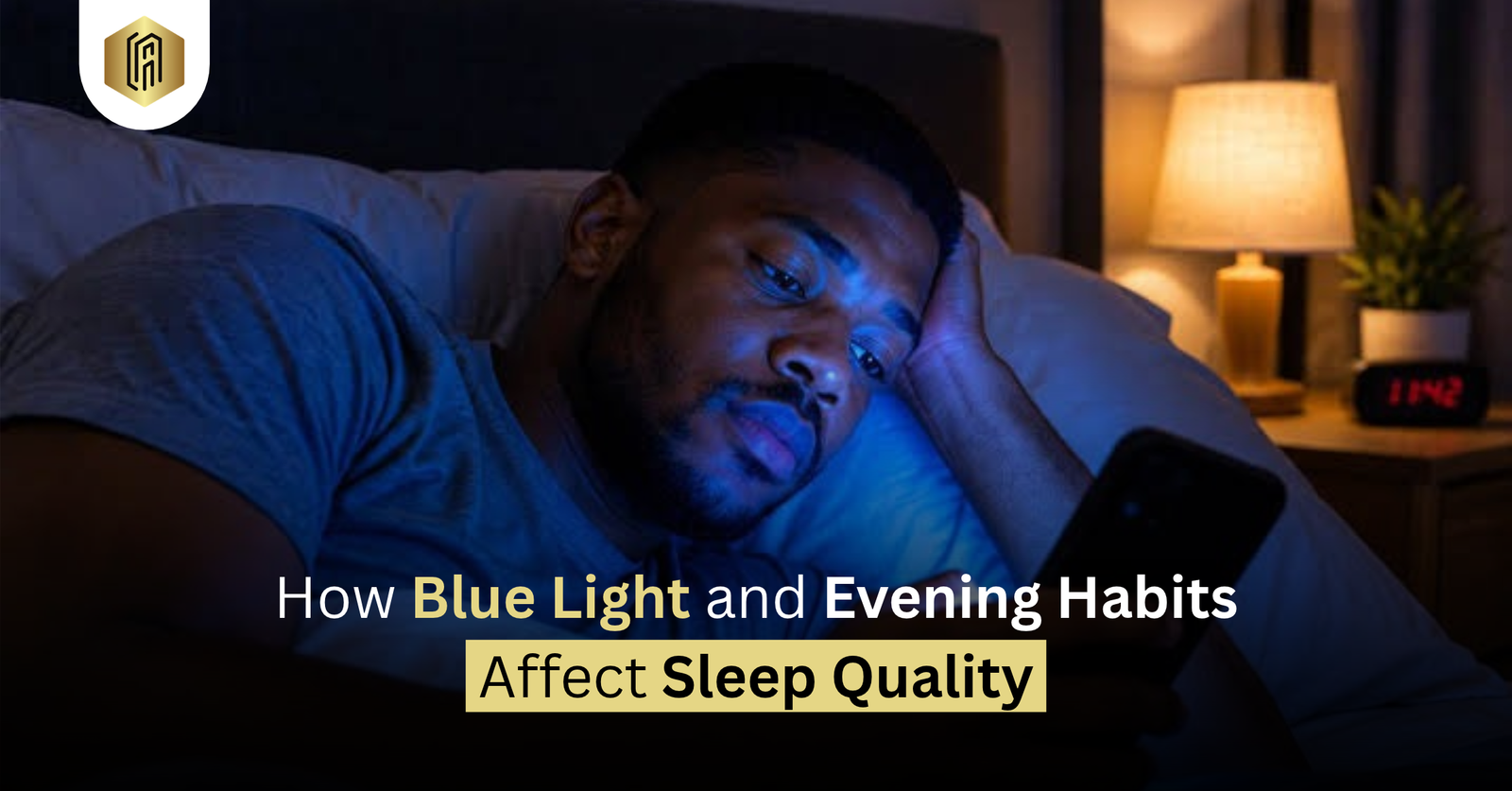
Sleep is more than simply the number of hours you are in bed. Sleep quality how quickly you fall asleep, how deeply you sleep, and how rested you feel the next day depends heavily on what happens in the hours before bedtime. Two of the most important influences are evening light exposure, especially from screens, and your broader end-of-day routines.
At Ascension Psychiatric Services, we often treat patients who have sleep problems that are directly linked to anxiety, depression, ADHD, or mood issues. Understanding how blue light and evening habits affect your body’s natural sleep systems can make a huge difference in your sleep and daytime mental clarity.
How Light Talks to the Brain
The body keeps time through an internal clock located in the brain. This clock is very sensitive to light. Specialized cells in the eyes sense light intensity and wavelength and send signals that help regulate melatonin. This hormone rises in the evening and helps induce sleep.
Short-wavelength light in the blue range is particularly good at telling the brain that it is daytime. In the evening, when this light hits the eyes, it might inhibit or delay the natural rise in melatonin and push the sleep window later. This typically leads to difficulty falling asleep and feeling less rested the next morning.
That doesn’t mean every minute of screen time impairs sleep. Intensity, duration, and timing are all important. The long time spent holding a bright screen close to your face in the hour or two before bed has a bigger effect than brief or dimmer exposure earlier in the evening.
Screens Are Only Part of the Story
Blue light gets a lot of attention, but the content on the screen may be just as important. Scrolling through work emails, engaging with emotionally charged social media, watching passionate shows, or responding to messages keeps the mind active. This mental and emotional excitement can prevent sleep even when light exposure is reduced.
Thus, the problem is rarely just the light. It’s the mix of light exposure and continual cognitive and emotional stimulation that makes it tougher for the nervous system to settle down.
Other Evening Habits That Shape Sleep
Blue light is one of the numerous common nighttime habits that can impact sleep quality:
- Timing of caffeine: Caffeine can remain in the bloodstream for many hours. If you are sensitive to it, taking it later in the day may not stop you from falling asleep but may make your sleep shallower and cause you to wake up more frequently throughout the night.
- Alcohol: Alcohol may help some people fall asleep faster, but it tends to fragment sleep later in the night and impair restorative periods of sleep.
- Intense exercise close to bedtime: Intense exercise increases body warmth and arousal. Many people have a tough time relaxing after a hard workout right before bed. Gentler movement is frequently better tolerated earlier in the evening.
- Bright overhead lighting: Household LED and fluorescent lights can also add to evening alertness, particularly when they stay bright until bedtime.
- Unsteady schedules: If you sleep and wake at very different times from day to day, it is harder for the internal clock to settle into a consistent routine.
These factors often interplay. Someone who uses bright screens late, drinks coffee in the afternoon, and has an erratic bedtime layers many forces that work against solid sleep.
Why This Matters for Mental Health
Poor sleep and mental health conditions may feed into each other. Your mind can race at night when you’re anxious. Depression may interfere with the continuity of sleep. People with ADHD have a difficult time stopping stimulating activities. Evening practices that further delay or lighten sleep typically result in mood, focus, and emotional control suffering the next day.
Enhancing the evening environment does not substitute for the treatment of underlying psychiatric conditions, but it can reduce one source of ongoing stress and promote the efficacy of other interventions.
Practical Ways to Support Better Evening Habits
Small, regular changes work better than strict regulations. Consider these approaches:
- Dim domestic lights in the last hour or two before bed. Use warmer lighting when available, and keep it low.
- Cut back on light screen time in the hour before bed. If screens are involved, dim the lights and utilize warmer display settings, but also consider whether the content itself is stimulating the mind.
- Set up a simple wind-down ritual that signals to your body it’s time to transition. This could be reading a physical book, doing some light stretching, journaling, or taking a quiet shower.
- If sleep feels precarious, take coffee earlier in the day.
- If you frequently wake up during the night or have unrefreshing sleep, watch your alcohol consumption around bedtime.
- To keep your internal clock on schedule, try to go to bed and wake up at around the same time every day, even on weekends.
- If you do tough workouts, try to do them earlier in the evening when you can.
These steps work best when you see them as experiments, not perfection requirements. Notice what really makes you feel refreshed.
When Professional Support Is Useful
If sleep difficulties continue despite reasonable changes to evening habits, or are tightly linked to anxiety, low mood, racing thoughts, or other psychiatric symptoms, a fuller evaluation is worthwhile. Sleep problems are a sign of mental health problems and also a cause of them. Often, addressing both sides produces better results than focusing on habits alone.
Virtual psychiatry means you can discuss your sleep patterns within the framework of your whole mental health and work out a plan that works for you.
Building a More Supportive Evening Rhythm
Evening habits, such as exposure to blue light from screens, can affect sleep by disrupting the body’s natural timing systems and arousal levels. Light can delay melatonin and delay sleep. Stimulating content, caffeine, alcohol, intense late exercise, and irregular schedules can contribute to the effect. The good news is that many of these factors can be changed.
A quieter, dimmer, more predictable evening routine helps with the transition to sleep. Over time, these changes can improve sleep quality and daytime mental clarity, especially as part of a broader approach to mental health.
At Ascension Psychiatric Services, we take sleep seriously as part of overall psychiatric care. We work with patients to identify pragmatic changes and address underlying contributors to sleep disruption.
If evening habits or blue light exposure seem to work against your rest, you don’t have to figure it out alone.
Want to learn how your evening habits and light exposure might be affecting your sleep? Call Ascension Psychiatric Services today to schedule a virtual consultation. We’re here to help you get more restorative nights and brighter days.
Related Posts:
FAQs
Does blue light from phones really affect sleep that much?
Exposure to bright, short-wavelength light in the evening can suppress melatonin and shift the body’s sleep timing. The effect depends on how bright it is, how far away the screen is, how long you use it, and what else is going on in the evening. Content that keeps the mind alert often makes it harder.
Is it enough to turn on night mode or blue-light filters?
You can get a small benefit from “warm” display settings, which reduce short-wavelength light, but that won’t eliminate the effects of bright screens or stimulating content. Usually, it’s more effective to turn down the screen, use it less in the evening, and pair the change with a more calming wind-down routine.
What if I already have anxiety or ADHD and screens help me unwind?
Many people use screens to unwind. The trick is noticing whether the content itself is actually relaxing, or if it’s just keeping the brain occupied. Moving to quieter activities closer to bedtime, giving some transition time, can help with mental settling and sleep.
This post is for educational purposes only and should not be used as a substitute for professional medical advice. Always consult with a qualified healthcare provider with any questions you may have about your health or a medical condition.



No comment