
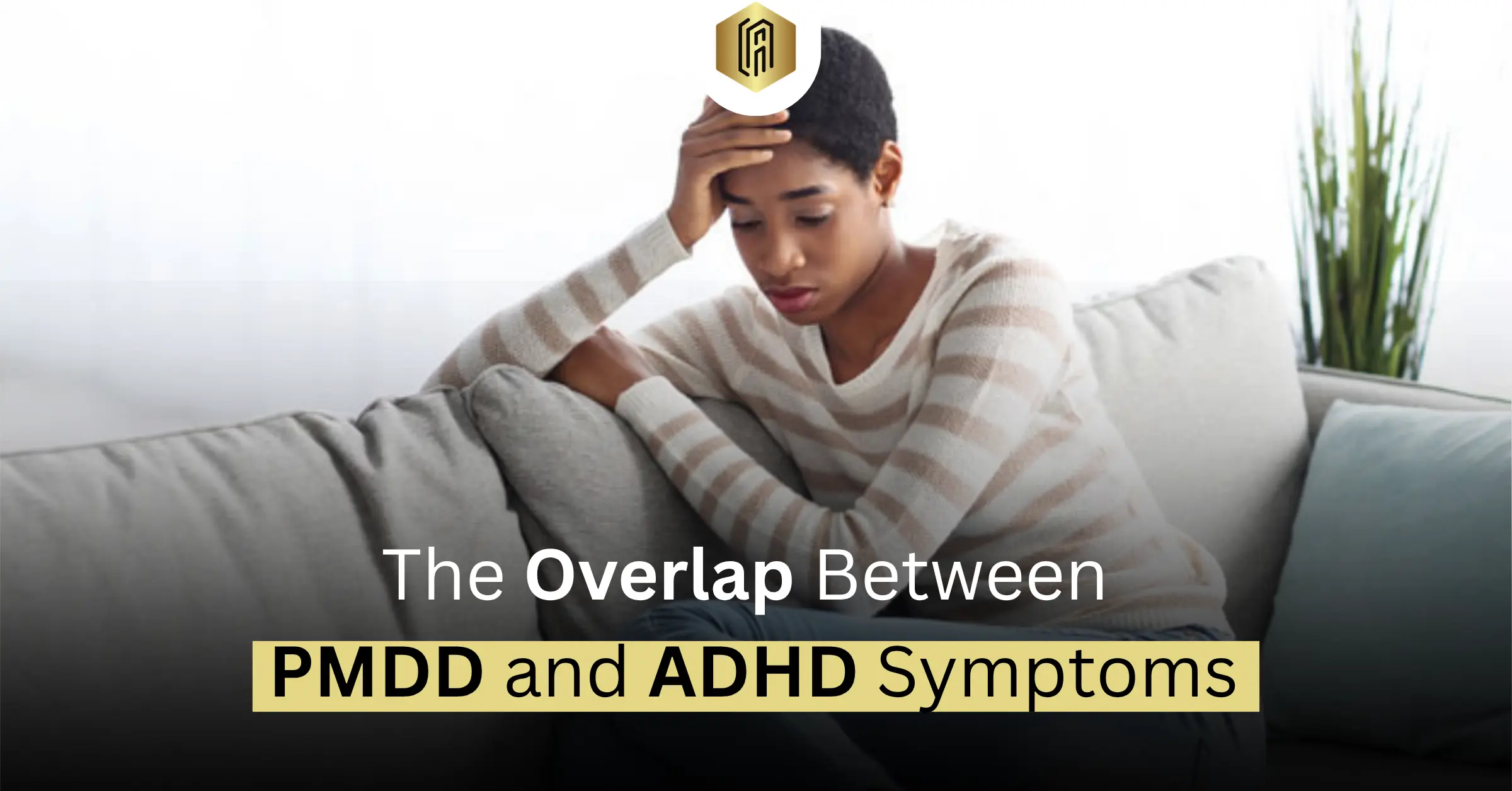
Many people with ADHD realize that their symptoms don’t stay consistent throughout the month. In the week or two before a period, focus, emotional control, energy, and irritation tolerance might change noticeably, often becoming more difficult. For some, those alterations are more than normal premenstrual changes and meet criteria for premenstrual dysphoric disorder, or PMDD.
Overlap between PMDD and ADHD is real and clinically relevant. Knowing how the two interact might make symptoms less confusing and lessen self-blame and the feeling that symptoms are random or “all in your head.” At Ascension Psychiatric Services, we often find individuals whose monthly patterns are clearer when we look at both conditions together.
Quick Orientation: What Each Condition Involves
ADHD is a neurodevelopmental condition that affects attention, impulse control, executive functioning, and often emotional regulation. The symptoms are consistent across settings and time, although their severity could vary.
PMDD is a cyclical mood condition that is related to the menstrual cycle. Symptoms occur in the luteal phase (post-ovulation and pre-menstruation), improve within a few days after bleeding starts, and are absent for much of the follicular phase. Core features include marked mood changes, irritability or anger, anxiety or tension, and sometimes physical symptoms that significantly interfere with daily life.
When both are present, the luteal phase can feel extremely challenging, as the challenges of each condition add together.
Why the Overlap Happens
Hormones affect brain chemicals that are important for ADHD and PMDD. The signaling of dopamine depends on estrogen. Dopamine helps with focus, motivation, working memory, and emotional control the very systems that are disrupted in ADHD.
In the late luteal phase, estrogen levels fall. That decline can further diminish dopamine availability for a brain that already handles dopamine differently. This can also lead to a temporary worsening of ADHD symptoms: more difficulty focusing, less frustration tolerance, increased emotional reactivity, and a stronger sense of being overwhelmed.
PMDD is not that you have abnormal hormone levels, but that you are too sensitive to typical hormonal changes. That sensitivity influences systems that regulate mood, such as the routes for serotonin and GABA. Combine this sensitivity with ADHD-related abnormalities in dopamine and emotional regulation, and the experience can feel intense.
Although the two conditions do not cause each other, they do share biological pathways that increase the propensity for their co-occurrence and for mutual amplification throughout the luteal phase.
Shared and Overlapping Symptoms
Several experiences show up in both conditions and can become more pronounced when they coincide:
- Emotional dysregulation: rapid shifts in mood, irritability, or anger that feel hard to control
- Difficulty concentrating or “brain fog”
- Heightened sensitivity to perceived criticism or rejection
- Fatigue or low motivation
- Sleep disruption
- A sense of being overwhelmed by everyday demands
When it is just ADHD, these patterns are usually there all month, but may get more pronounced with stress. In PMDD, they cluster in the luteal phase and ease with the onset of menstruation. When both are present, the luteal week might lead to a sharper increase in emotional intensity, worse focus, and a decreased ability to use regular coping methods.
Rejection sensitivity, a prevalent trait in ADHD, could be felt more intensely during the premenstrual window. Small moments between a person and another can have a lot of emotional weight, and they can take a long time to recover from.
Distinguishing Premenstrual Exacerbation from PMDD
Not all premenstrual exacerbation of ADHD symptoms is PMDD. Many people with ADHD have premenstrual exacerbation (PME), meaning their chronic ADHD symptoms just become more obvious or more difficult to manage in the luteal phase.
PMDD is recognized by a more pronounced pattern of luteal-phase symptoms that are markedly diminished or absent at other points in the cycle. Keeping track of symptoms for at least two full cycles helps determine if the pattern fits PMDD, PME of ADHD, or both. Daily notes on mood, irritation, focus, energy, and sleep, timed to the cycle, are valuable for evaluation.
How the Combination Affects Daily Life
When PMDD overlaps with ADHD, the luteal phase can disrupt work, relationships, and self-care more than either disorder alone. Tasks that are usually manageable may feel impossible. Feelings can seem exaggerated. Medication that works effectively at other times of the month may seem to operate less well. The recovery that happens with the onset of menstruation can feel like a quick return to baseline, which can be confounding in itself.
Observing the pattern in a cycle helps distinguish between “this is who I am all the time” and “this is a predictable window that needs extra support.”
Practical Steps That Can Help
Accurate diagnosis and treatment planning require professional examination, although various daily strategies contribute to improved management:
- For a couple of months, track symptoms against your menstrual cycle. Monitor your focus, mood, irritability, energy, sleep, and whether you have the impression that your typical coping methods are harder to employ.
- When possible, schedule lower-demand days or lighter schedules during the projected luteal phase.
- Strengthen external supports in advance: reminders, simplified routines, or aid with chores that grow harder.
- Guard sleep and basic self-care; symptoms of both ADHD and PMDD tend to worsen when rest is limited.
- Talk to your health care physician about the pattern. Symptoms consistently changing during the cycle provide valuable clinical information.
- Consider whether timing of medication or dose adjustments over the cycle may be suitable; this is an individualized decision made with a clinician.
These steps aren’t a replacement for treatment, but they can help lessen the feeling of being blindsided each month.
Seeking Evaluation and Support
A complete assessment examines the full scope: lifelong patterns of ADHD, the timing and intensity of premenstrual symptoms, and the relationship between the two. Depending on the particular presentation, the treatment can target ADHD, PMDD, or both. Strategies may involve medication, treatment around emotional management and executive abilities, and, where appropriate, hormonal or cycle-related options explored with a trained clinician.
Virtual psychiatric care offers a convenient setting to discuss these tendencies and create a plan to manage both diseases.
Moving Toward Greater Predictability and Support
The association between PMDD and ADHD is not a personal flaw or a symptom of poor coping. It shows how hormonal changes interact with brain circuits that are already operating differently in ADHD. Knowing that the monthly intensification has a predictable pattern and that both illnesses can be managed is a relief to many people.
By having clear tracking, informed evaluation, and personalized support, it is feasible to limit the impact of the luteal window and keep a more consistent functioning over the cycle.
At Ascension Psychiatric Services, we take a careful, individualized approach to ADHD, PMDD, and their intersection. If your ADHD symptoms consistently worsen before your period, or if the mood and focus shifts before your period seem to be more intense than usual, you don’t have to figure out the pattern on your own.
Are you ready to investigate how symptoms of PMDD and ADHD may overlap and what kind of support may help?
Contact Ascension Psychiatric Services today to set up a virtual consultation. We are here to help you get more clarity and more stability throughout the month.
FAQs
Can you have both PMDD and ADHD at the same time?
Yes. The two conditions can and do co-occur. When they do, luteal-phase symptoms often feel more intense because the challenges of each condition reinforce each other.
Why do my ADHD symptoms get worse before my period?
Estrogen supports dopamine signaling. When estrogen drops in the late luteal phase, dopamine availability can decrease. For a brain that already manages dopamine differently, this shift often makes focus, emotional regulation, and stress tolerance harder.
Is premenstrual worsening of ADHD the same as PMDD?
Not necessarily. Premenstrual exacerbation means persistent ADHD symptoms become more obvious before a period. PMDD is defined by a distinct cluster of luteal-phase mood and other symptoms that improve with the onset of menstruation. Tracking over cycles helps elucidate the trend.
This post is for educational purposes only and is not a substitute for professional medical advice. Always consult with a qualified healthcare provider regarding your specific health needs and treatment options.





No comment