
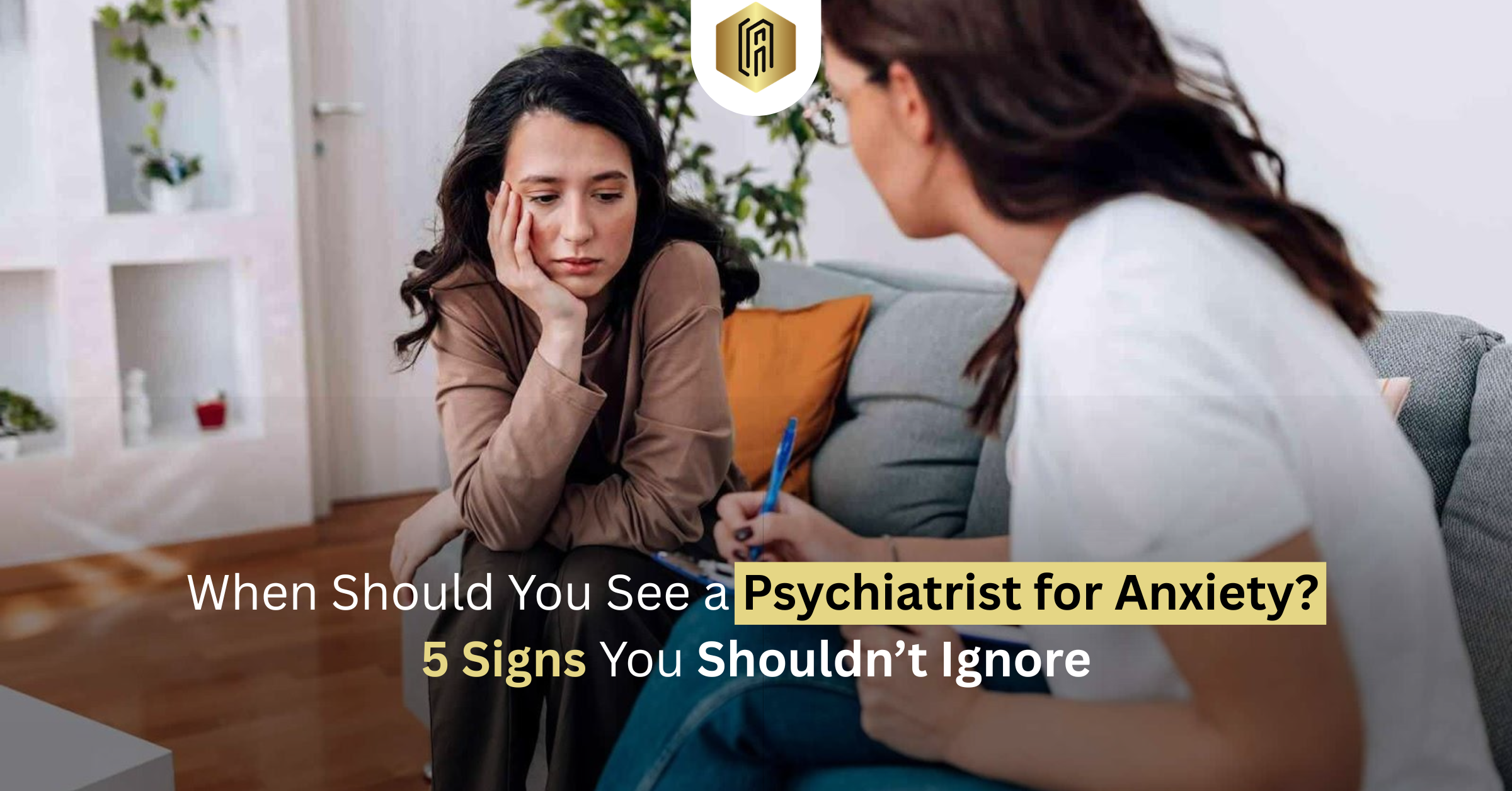
It can be the first day of a week, you have a work deadline, or any other troublesome situation; your mind may start racing with a million “what if” scenarios, robbing you of your tranquility and leaving you barely time to breathe. It might be time to get professional assistance when anxiety has escalated to the point where it has started to interfere with your everyday activities, leaving you burned out, exhausted, or simply unable to concentrate on family, work, or your personal goals.
At Ascension Psychiatric Services, our board-certified psychiatric mental health nurse practitioner (PMHNP) offers virtual treatment and Anxiety Functional Therapies if you have been experiencing anxiety that won’t go away. The five obvious markers below are not intended to be a self-diagnosis tool; they are practical cues to help you understand when a visit to an anxiety psychiatrist evaluation can be meaningful.
Quick Answer: When Should You See a Psychiatrist for Anxiety?
You will require an appointment with a psychiatrist because of anxiety in this case:
- You are anxious all the time or whenever you experience stress
- It disrupts work, family life, or normal routines
- Tension or fatigue continues to be experienced physically
- Coping strategies are no longer effective
- You observe overlapping mental health signs such as depressed mood or lack of concentration
Understanding the Difference Between Normal Anxiety and Clinical Anxiety
Normal Anxiety: We all encounter circumstances that naturally cause concern, perhaps an upcoming deadline at work, family, medical, or financial problems. That amount of daily worry tends to increase when responding to a particular trigger. Usually, it decreases as the situation changes or when you take practical action to deal with it. It is something you feel you can handle and does not prevent you from continuing your day.
Clinical anxiety, conversely, is persistent even in steady circumstances. It can be more severe, uncontrollable, and begin to interfere with key areas of life. You may notice worries extending to many different subjects or appearing without an explainable cause. Over time, this pattern can affect concentration, sleep, physical comfort, and relationships.
Early psychiatric assessment, including medication management when suitable, can help prevent anxiety from worsening. It allows thoughtful evaluation and the development of an individualized anxiety management program.
Some ways untreated anxiety may manifest in everyday life include:
- Emotional distance between you and family members during family time
- Avoiding meaningful, personal goals or activities
- Cycle of worry/concern that recurs regularly/throughout the day
If you recognize any parts of this list as being similar to or like something you are experiencing, you are not alone; there is help available.
5 Clear Signs It’s Time to Consider Psychiatric Care for Anxiety
-
Anxiety Is Quietly Straining Your Closest Relationships
When anxious, you often create small rifts (being cranky with family members or mentally snapping while they’re speaking) between yourself and those who are important to you.
These rifts can have a big impact on emotional connection, communication, and ultimately the quality of your relationship. Your anxiety can reveal a noted pattern of behavior that may be helpful to identify when you see a psychiatrist for an evaluation. Your psychiatrist can provide suggestions on how to regain a sense of connection.
-
Routine Responsibilities and Personal Goals Start Feeling Overwhelming
Even the simplest tasks can feel exhausting when anxiety becomes chronic. You may notice:
- Putting off significant duties
- Avoiding social or family activities
- Losing motivation for things you once enjoyed
This is a key indicator that anxiety is disrupting daily life, and professional guidance through therapy or medication may be necessary.
Read more about why anxiety gets worse at night and what you can do about it.
-
Physical Symptoms Tied to Anxiety Persist Despite Self-Care
Anxiety often manifests physically. Common symptoms include:
- Muscle tension or jaw clenching
- Drowsiness or insomnia
- Gastrointestinal problems or headaches
If these symptoms persist even with rest and self-care, a psychiatric assessment can help address both the mental and physical effects of anxiety.
-
Coping Strategies That Once Worked Are No Longer Effective
Techniques like deep breathing, exercise, and journaling may stop providing lasting relief. At this point, anxiety medication management combined with other strategies can help stabilize symptoms and make coping tools effective again.
-
You Notice Overlapping Mental Health Symptoms
Anxiety often overlaps with other concerns, such as:
- Difficulty concentrating
- Changes in sleep or appetite
- Periods of low mood
A complete psychiatric evaluation can clarify the situation and inform a more efficient, individualized treatment plan.
How Ascension Psychiatric Services Provides an Integrative Approach to Anxiety Care
At Ascension Psychiatric Services, mental health care follows an integrative approach that combines multiple evidence-based strategies for comprehensive support. The team uses a combination of same-day medication management, GeneSight® genetic testing, psychotherapy, lifestyle-change counseling, and thorough psychiatric assessments to address anxiety and related conditions.
For individuals experiencing moderate to severe anxiety, medications can:
- Reduce symptom intensity
- Improve daily functioning
- Enhance the effectiveness of therapy
A PMHNP-led approach ensures:
- Holistic evaluation considering mental, physical, and lifestyle factors
- Evidence-based medication options tailored to each patient’s unique needs
- Continuous monitoring and adjustment to optimize treatment outcomes
The Advantages of Virtual Psychiatric Services for Anxiety
Virtual psychiatric services simplify access to care. Anxiety treatment becomes more convenient as patients can receive support from home. Benefits include:
- Flexible scheduling
- No travel or commute
- Increased privacy
- Easier follow-ups
We also offer virtual psychiatric care to patients in multiple states, making professional help more accessible than ever.
What to Expect in Your First Virtual Anxiety Evaluation
Your first visit is a relaxed, structured conversation. During your virtual assessment, you will discuss:
- Symptoms and concerns
- Impact on daily life
- Past medical and mental health history
Together, you will develop a personalized plan, which may include therapy, medication, lifestyle changes, or additional supports.
Common Treatment Approaches for Anxiety
Anxiety treatment is rarely one-size-fits-all. At Ascension Psychiatric Services, our approach includes:
- Functional Therapies for Anxiety: Individualized, evidence-based treatments that target the root causes of anxiety, helping regulate thoughts, emotions, and behavior. Common forms include cognitive behavioral therapy (CBT), meditation, hypnosis, guided relaxation, yoga, tai chi, qigong, imagery, herbal supplements, aromatherapy, animal-assisted therapy, music therapy, and naturopathy. Many patients notice significant improvements in mood and daily functioning after just a few sessions.
- Medication Management: Medications can help balance brain chemistry, reduce symptoms, and support therapy.
- Lifestyle and Behavioral Strategies: Stress management skills, mindfulness practices, improved sleep, and sustainable movement routines.
Effective plans often combine these elements with ongoing follow-ups to monitor progress and adjust strategies, helping restore calm, focus, and resilience.
When Anxiety Requires Immediate Attention
If anxiety becomes intense, such as panic, unsafe thoughts, or inability to function, seek help immediately.
In the United States, the 988 Suicide & Crisis Lifeline is available 24/7.
Taking a Step Toward Managing Anxiety
The five signs we discussed: strained relationships, difficulty with responsibilities, persistent physical symptoms, ineffective coping strategies, and overlapping concerns, are important indicators. Consulting an anxiety psychiatrist or PMHNP proactively can help you regain control, presence, and peace.
If these signs resonate, consider scheduling a virtual psychiatric evaluation. You deserve to feel calm, focused, and in control once again.
FAQs
Is anxiety always a disorder?
No, it becomes concerning when it persists and affects daily life.
Can a PMHNP prescribe anxiety medication online?
Yes, psychiatric care providers can prescribe and manage medications through secure virtual visits.
How long does anxiety treatment take?
Many individuals notice improvement within weeks, with continued progress over time.
Does virtual psychiatric care work?
Yes, research and clinical practice show online psychiatry for anxiety is highly effective for many patients.





No comment