
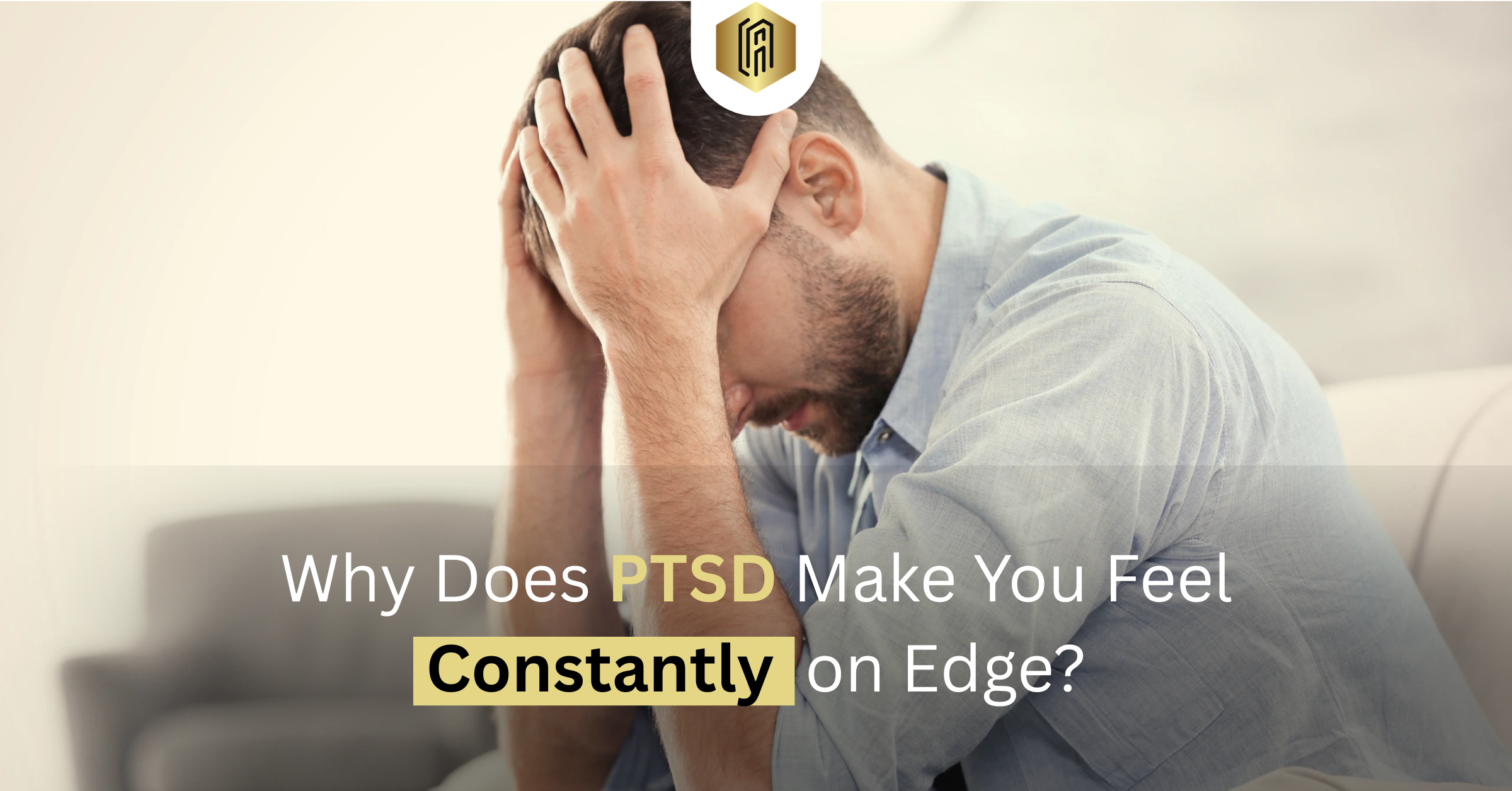
You’re in your own living room, yet your mind keeps looking at the door, ready for trouble that never shows up. Your body feels like it’s waiting for the other shoe to drop, even when things are safe.
This persistent feeling of being on edge is called PTSD hypervigilance for many persons with post-traumatic stress disorder. This condition of constant alertness eventually becomes the background noise of life, and loved ones often don’t understand and advise you to “just relax.”
You’re not the only one who wants to know why you feel constantly on edge. This guide talks about what PTSD hypervigilance feels like, why your brain stays on high alert after trauma, and what you can do to lower the volume on your ongoing attentiveness ultimately.
Why Does PTSD Make You Feel Constantly on Edge?
Hypervigilance, or being continually on edge, is a common symptom of PTSD. This is when the brain stays very vigilant, even when there is no genuine risk. Trauma affects how the brain thinks about safety and danger, which keeps the nervous system in survival mode.
This is why you could feel stiff, on edge, or unable to relax all the way, even while you’re safe.
PTSD Hypervigilance Symptoms: What It Actually Feels Like Day to Day
Hypervigilance generally shows itself as a steady, low-level sense of alertness that doesn’t go away too often. This persistent feeling of being on edge is one of the most typical PTSD symptoms and may make everyday living feel completely overwhelming.
Your nervous system is always on guard when you have a trauma response. Signs of hypervigilance that happen every day can include:
- Heightened startle response: You jump at normal sounds, such as a car door closing outside.
- Compulsive safety checks: Checking locks or exits more than once when you don’t need to.
- Constant threat scanning: Scanning faces in a crowded space all the time, not because you think there is danger, but because your brain has to be ready.
- Physical reactions: Having a sudden racing heart or surge of adrenaline, even when you’re having a calm conversation with someone you trust.
The emotional and physical costs of this symptom are very significant. You might feel these things when your body is in a state of high alert:
- Chronic fatigue: Your energy runs out considerably faster than normal, so you feel tired even after a full night’s sleep.
- Shortened temper: Your nervous system is already working too hard, so you may not have as much patience with your partner or kids.
- Emotional distance: When people you care about see that you seem distant, distracted, or “not quite there,” you may feel a silent sense of shame.
Having PTSD hypervigilance symptoms is not a sign that you are overreacting or being theatrical. It’s just your brain doing what it was trained to do: keep you safe long after the actual danger has passed.
Why PTSD Keeps Your Brain in High Alert Mode After Trauma
Your Brain’s Loyal Bodyguard Analogy
Think of your brain as having a bodyguard whose only mission is to keep you safe. That bodyguard stepped up and did everything they could to keep you safe during a horrific event.
But for someone with PTSD, the bodyguard never really stops working. Now, even when the doors are secured and everything is safe, every little noise, new person, or abrupt movement is seen as a possible threat.
How Trauma Changes the Brain’s Safety Settings
Trauma makes the brain’s defensive system more alert. The normal “all clear” signal gets softer, thus the alert system stays on.
What used to assist you stay alive now runs in the background, putting you on edge all the time.
Your brain isn’t broken; it’s just still attempting to keep you safe.
Common Ways PTSD Hypervigilance Shows Up
Hypervigilance can seem different for different people, but a lot of people can relate to these everyday situations:
- Always looking for exits or paying close attention to individuals
- Getting anxious or angry when the place is too quiet
- Having trouble falling asleep or staying asleep
- Being too protective of loved ones
- Always being on edge or “on guard.”
These are all classic signs of hypervigilance in PTSD, not signs of personal weakness.
How Hypervigilance Affects Daily Life and Relationships
The impacts don’t only happen to one person. Kids could sense the stress and start to act like they’re on eggshells. When plans alter because someone is uncomfortable or when conversations are cut short by abrupt reactions, partners may feel left out.
This constant state of being on guard because of PTSD can make you feel emotionally distant over time, even if you still love and care about the person.
No one is to blame for this situation. That’s the response to trauma talking.
How to Reduce Hypervigilance and Feel Less on Edge
Getting professional help for PTSD is the best way to get over trauma, but adding small routines to your daily life can help you deal with PTSD symptoms and find times of peace.
Grounding Techniques
Grounding techniques can help a lot with anxiety and flashbacks. One of the best ways to use your senses to bring your mind back to the present is the 5-4-3-2-1 method. This is how to do it:
- Five things you can see: Find five things in your surroundings.
- Four things you can feel: Touch four things, such as your clothes or the chair you’re sitting in.
- Three things you can hear: Listen carefully to three different sounds, like a clock ticking or cars driving by.
- Two things you can smell: Try to calm yourself by focusing on two smells around you that you like.
- One thing you can taste: Think of something you can taste, like a drink of water or a piece of gum.
Create Safe Signals
Establish personal safe signals to help your nervous system remain calm during periods of high stress. Simple reminders can be surprisingly effective in keeping you centered.
For example, repeating a calming phrase, keeping something comfortable, or putting your hand over your heart in a reassuring way to calm yourself.
Celebrate Small Wins
Healing from trauma is a journey; even brief moments of calm matter. Recognizing your achievements can boost your self-assurance and strengthen your mind, fostering resilience and emotional steadiness.
PTSD Treatment for Hypervigilance: The Benefits of Professional Support
You needn’t navigate PTSD hypervigilance alone. Professional care can assist your brain in relearning how to unwind.
Treatment could include:
- Trauma-focused therapy
- Cognitive-behavioral therapy (CBT)
- Medication management, if deemed appropriate
Getting professional assistance can make a real difference in your daily life.
Online Treatment for PTSD and Hypervigilance
Virtual therapy offers a more accessible path to treatment.
- You can connect with your care team from the comfort of your own home.
- You’ll receive consistent follow-up appointments.
- And, of course, treatment plans can be adjusted as your needs change.
Online care removes many of the barriers, making it simpler to stay engaged in your recovery.
Clearing Up Common Worries About Feeling Constantly on Edge
“I’m just anxious or weak.”
This is a trauma response, not a personal flaw.
“It will never get better.”
With support, many people experience significant relief.
“My family thinks I’m overreacting.”
One can make others comprehend hypervigilance by explaining it as a protective response.
Taking the Next Step Toward Feeling Safer
Your brain is trying to protect you, which is why you always feel “on edge.” It can learn to relax again with the right help.
Our board-certified therapists at Ascension Psychiatric Services offer caring online treatment for PTSD and other trauma-related problems. With our easy-to-use telemedicine sessions, we can give you specialized treatment, such as therapy assistance and help with taking your medications.
Make an appointment for a private online session today and start feeling calmer, safer, and more in control.
Key Takeaway
If you have PTSD, you may feel like you’re always on edge because you’re hypervigilant. But with the right help and treatment, your brain can learn to feel safe again.
Related Posts:
FAQs
Does hypervigilance ever go away completely?
With the correct help, it gets a lot quieter for a lot of people over time.
Can kids and teens experience hypervigilance?
Yes, and it could look like being clingy, having trouble focusing, or being easily startled.
Are there non-medication ways to manage PTSD?
Yes, therapy, grounding techniques, and changing your lifestyle can all help.




)
No comment