
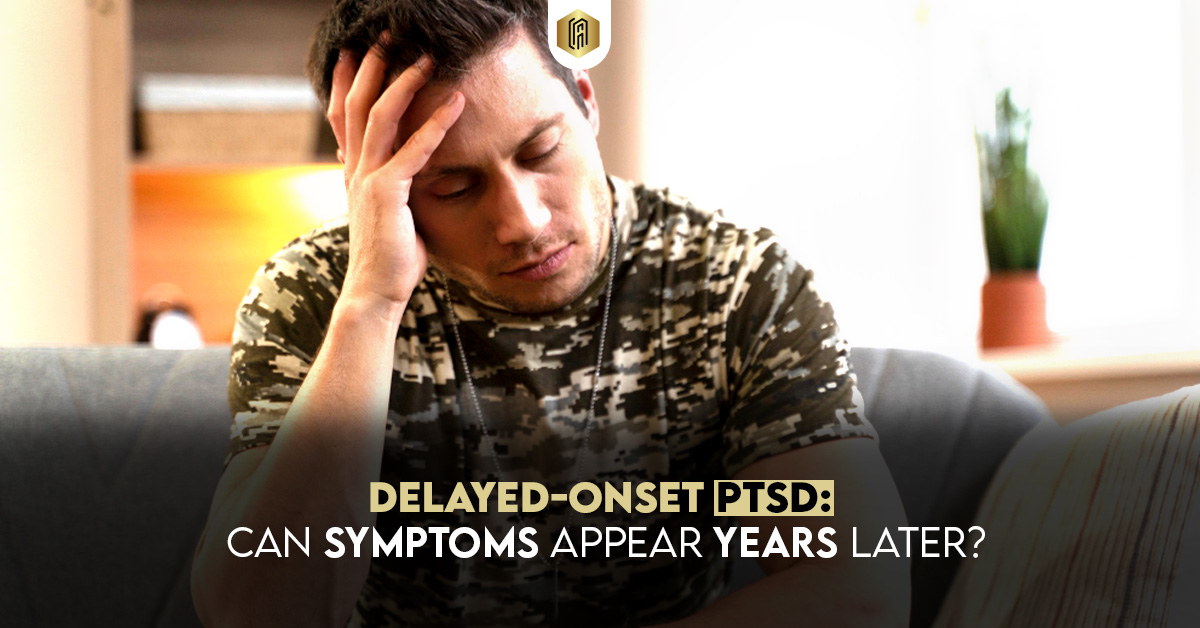
People with Post-Traumatic Stress Disorder (PTSD) often have flashbacks and anxiety right away, but their symptoms don’t always happen in a set order. Some people may not show signs of trauma until months or even years after the event. This is called delayed-onset PTSD.
PTSD can develop long after the event that caused it. This article talks about the causes, symptoms, and diagnosis of delayed-onset PTSD, as well as good treatment options that can help you get the help you need.
What Is Delayed-Onset PTSD?
Definition and Symptoms
Delayed onset PTSD is a type of post-traumatic stress disorder that doesn’t show up until six months or more after the traumatic event. Delayed-onset PTSD can show up years later, often because of big changes in life, more stress, or getting older. This is different from regular PTSD, where symptoms usually show up within weeks.
This delay does not mean that the first trauma was dealt with or forgotten. Instead, the brain probably blocked or separated the experience as a way to stay alive. When these initial coping strategies fail or become too much, symptoms of delayed-onset PTSD often show up.
Common triggers for delayed symptoms include:
- New traumatic experiences
- Major changes in life, like getting divorced, retiring, or becoming a parent
- Loss of social support systems
Is Delayed-Onset PTSD Officially Recognized?
Yes, delayed-onset PTSD is a real medical condition that is listed in the DSM-5 diagnostic guidelines. A common myth posits that post-traumatic stress disorder symptoms must appear immediately; however, trauma affects the brain and nervous system in intricate ways. Symptoms that show up months or even years later are just as real as those that show up right away, and they need to be treated by a professional
Can PTSD Symptoms Really Appear Years Later?
Understanding Delayed PTSD Symptoms
There are a few main reasons why PTSD symptoms might not show up right away:
- Emotional Suppression and Avoidance: People often unconsciously push away painful memories so they can keep going about their daily lives, which delays the emotional impact.
- Survival Mode: The brain may prioritize immediate safety, job commitments, or caring responsibilities over processing emotional trauma.
- Life Stability: Sometimes, a structured, predictable environment can hide symptoms that are really there, making them easier to deal with for a while.
- Delayed Processing: The recurrence of trauma often occurs only when the brain feels “safe enough” to face the traumatic event.
People may experience mild or subthreshold symptoms, like occasional anxiety, irritability, or sleep disturbances, long before they develop into a diagnosable disorder in many cases of delayed-onset PTSD.
Common Trauma Triggers That Can Reactivate Symptoms
Certain triggers can make trauma symptoms come up or get worse, such as:
- Trauma anniversaries (dates marking the original event)
- Major life stressors (losing a loved one, divorce, career changes)
- Physical health issues, such as illness or injury
- Transitioning to parenthood or caregiving roles
- Sensory reminders (specific sounds, smells, locations, or media coverage)
- Global stressors, including pandemics or extended isolation
These triggers can get around coping strategies that have already been put in place, bringing back unresolved trauma.
Signs and Symptoms of Delayed-Onset PTSD
Emotional and Psychological Symptoms
People with delayed-onset PTSD often feel very upset emotionally months or years after the traumatic event. Some common emotional symptoms are:
- Intrusive memories: Vivid flashbacks that make you feel like you’re going through the trauma again.
- Intense anxiety: Feelings of extreme fear, guilt, or shame.
- Panic attacks: Sudden episodes of emotional distress.
- Emotional numbness: Feeling cut off from or distant from loved ones.
- Perceived danger: Feeling unsafe, even in safe places.
Physical and Behavioral Signs
Trauma can show up in the body and affect how a person acts and how their body works. Some physical signs of PTSD that start later may include:
- Sleep disturbances: Not being able to sleep (insomnia), having trouble falling asleep, or having nightmares all the time.
- Chronic fatigue: Feeling tired all the time or having tight muscles.
- Irritability: Getting angry or acting aggressively all of a sudden.
- Avoidance behaviors: Staying away from people, places, or activities that bring back memories of the trauma.
- Social withdrawal: Cutting yourself off from friends and family.
- Substance misuse: Using drugs or alcohol more often to deal with problems.
Cognitive and Mood-Related Changes
Delayed-onset PTSD can also alter cognitive patterns and general mood. Key indicators include:
- Cognitive impairment: Having trouble focusing or forgetting things.
- Negative worldview: Forming harmful beliefs about yourself or the world.
- Depressive symptoms: Feeling hopeless, sad, or uninterested in hobbies all the time.
- Hyperarousal: A state of being always on guard or “on edge.”
Who Is at Risk for Delayed-Onset PTSD?
Types of Trauma Linked to Delayed Symptoms
Delayed-onset PTSD has been linked to many forms of trauma, including:
- Childhood abuse or neglect
- Military combat or first-responder experiences
- Sexual assault or domestic violence
- Serious accidents or injuries
- Medical trauma or life-threatening illness
Risk Factors That Increase Vulnerability
Certain factors may increase the likelihood of delayed-onset PTSD:
- Lack of emotional or social support after trauma
- Multiple or repeated traumatic experiences
- Already having anxiety or depression
- Working or living in a high-stress environment
- Cultural stigma around mental health that makes people less likely to seek help
How Common Is Delayed-Onset PTSD?
Studies show that about 10% to 25% of all PTSD cases are delayed-onset PTSD. In numerous cases, individuals initially exhibit mild symptoms that progressively intensify over time. It’s very important to recognize these early signs of PTSD so that you can get the right help, even if the traumatic event happened years ago.
Why Trauma Can Resurface Later: A Brain-Based Explanation
Trauma fundamentally alters the brain’s fear circuitry and memory systems. Over time, things like long-term stress, getting older, or big changes in life can make it harder for the brain to block out traumatic memories. When this suppression doesn’t work, the nervous system may go into a state of hyperarousal, which can cause PTSD symptoms to show up out of the blue.
Delayed-Onset PTSD vs. Other Mental Health Conditions
PTSD vs. Anxiety Disorders
Both PTSD and anxiety disorders involve fear, but PTSD is different because it is based on past trauma. Flashbacks, avoidance behaviors, and trauma-related triggers are some of the symptoms of PTSD that are different from those of general anxiety.
PTSD vs. Depression
Depression mostly changes how you feel and how motivated you are, but PTSD has symptoms that are specific to trauma. A lot of people have both, which makes it harder to figure out what’s wrong.
The Importance of Accurate Diagnosis
Delayed-Onset PTSD is frequently misdiagnosed because its symptoms are similar to those of other conditions. A professional trauma-informed evaluation is necessary to guarantee suitable treatment and recovery.
How Is Delayed-Onset PTSD Diagnosed?
What to Expect During an Evaluation
Diagnosis typically involves:
- A detailed review of symptoms and life history
- Trauma-informed, respectful questioning
- A safe, supportive environment where individuals control what they share
Why Timing Does Not Invalidate the Diagnosis
PTSD has no expiration date. Symptoms that appear years later are still valid, diagnosable, and treatable.
Treatment Options for Delayed-Onset PTSD
Evidence-Based Therapy Approaches
Effective treatments include:
- Trauma-Focused Cognitive Behavioral Therapy (TF-CBT)
- EMDR (Eye Movement Desensitization and Reprocessing)
- Acceptance and Commitment Therapy (ACT)
These therapies help individuals safely process trauma and reduce symptom intensity.
Medication Management
Medication may help manage symptoms such as:
- Anxiety or panic
- Sleep disturbances
- Mood instability
Medication is often most effective when combined with therapy.
Holistic and Supportive Strategies
Supportive approaches may include:
- Stress-management techniques
- Strong family and social support
- Healthy sleep and daily routines
- Avoiding substance use as a coping strategy
When Should You Seek Professional Help?
You may benefit from professional care if:
- Symptoms interfere with daily life or relationships
- Avoidance or isolation increases
- Emotional distress feels overwhelming
- Coping strategies no longer work
It’s never too late to seek help. Healing is possible at any stage, regardless of when symptoms appear.
How Ascension Psychiatric Services Can Help
Ascension Psychiatric Services offers high-quality virtual psychiatry visits that let people in many states get expert care without having to travel or wait a long time.
Our services offer:
- Compassionate, confidential treatment
- Individualized care plans tailored to your needs
- A non-judgmental, inclusive environment
Achieve Long-Term Healing and Recovery
With the right psychiatric support, you can experience lasting improvements in your well-being.
Through appropriate care, individuals can:
- Build resilience and emotional stability
- Regain a sense of safety and control
- Improve relationships and daily functioning
- Move forward with confidence and hope
FAQs
Can PTSD really start years after a traumatic event?
Yes. Delayed-onset PTSD can appear months or even years later, often triggered by life stressors or changes that bring the trauma to the surface.
How common is delayed-onset PTSD?
It’s fairly common, about 10–25% of PTSD cases. Symptoms can start mild and go unnoticed for years before becoming more obvious.






No comment