
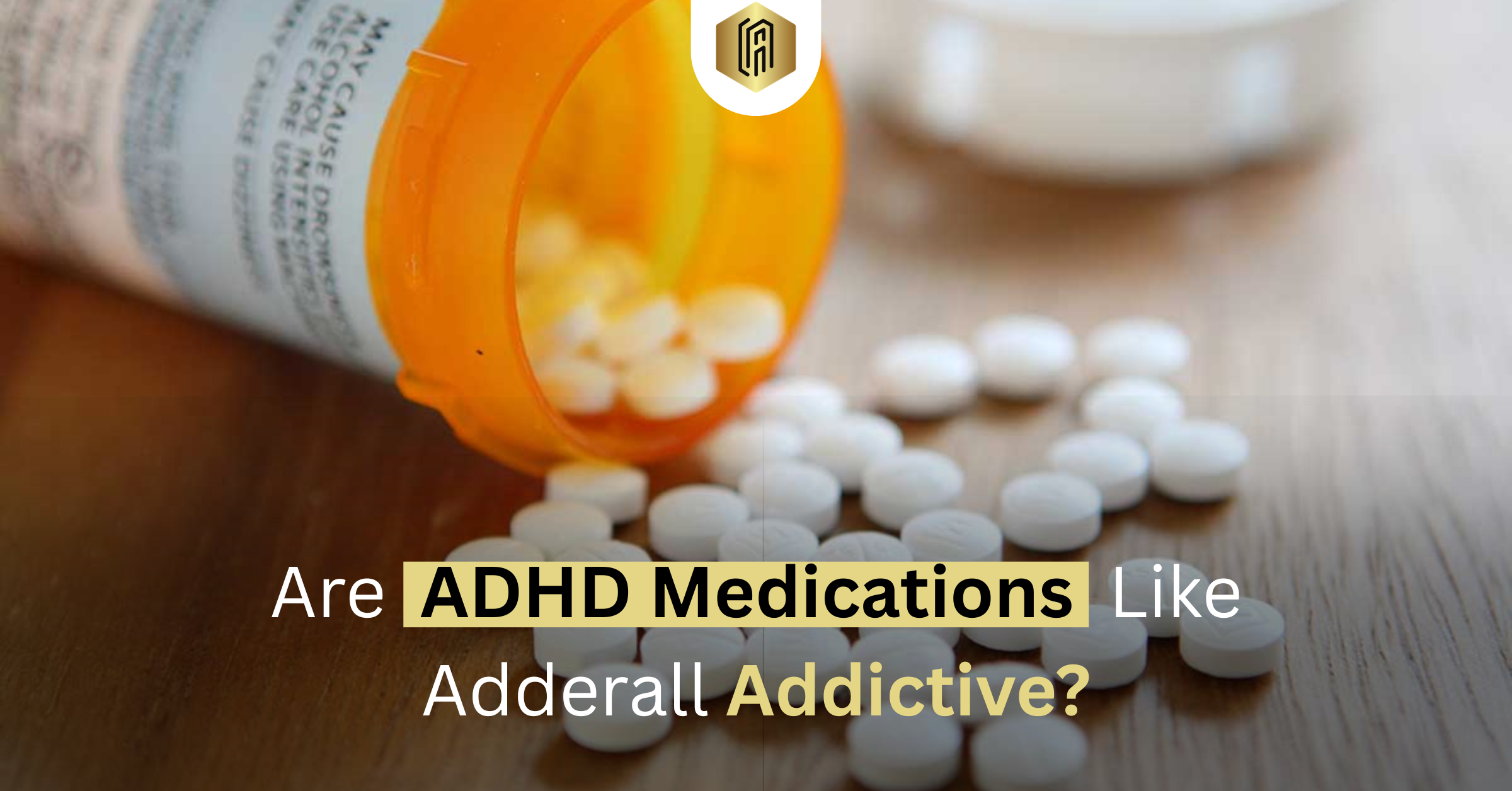
you’re not the only one who is worried that taking an ADHD medication like Adderall could make you addicted. It’s understandable to be worried when you hear about shortages of stimulants and see articles about them on social media. These worries are understandable. People get ADHDtreatment to help them focus, control their emotions, and do better in their daily lives, not to trade one problem for another.
The good news is that ADHD stimulant medications aren’t usually addictive when used as directed and under the care of a doctor.
In this post, we’ll talk about how these medications operate, the most important difference between dependency and addiction, and how telepsychiatry keeps therapy safe.
Why People Worry About ADHD Medications and Addiction
People are often afraid of becoming addicted to Adderall because of news articles about people abusing stimulants and popular social media stories. These personal experiences are valid, but they can make patients think that all ADHD medications have the same significant dangers, which is not true.
These worries are also becoming more widespread as more and more adults are diagnosed with ADHD later in life. As more people learn about symptoms like chronic procrastination, emotional impulsivity, and trouble focusing, it’s only inevitable that worries about the safety of ADHD medications will come up.
But you should think about these worries in light of the real problems that come with not treating ADHD, which can include:
- Issues at work
- Stress in your relationships
- More likely to self-medicate
Getting help from a professional is the best way to deal with symptoms. This gives people a safe and responsible way to look into different ways to treat ADHD.
How ADHD Stimulant Medications Like Adderall Work
To know why ADHD medications are not normally addictive when taken properly, it is only essential to know how they act within the brain.
The causes of ADHD are associated with the variation in the functioning of the brain chemicals, mostly dopamine and norepinephrine, in regions of the brain that are involved in the area of attention, impulse control, and motivation.
The stimulant medications like Adderall are used to maintain these chemical functions so that the brain can concentrate better and handle the workload more aptly and with discipline. The resultant effect, as described by many patients, does not necessarily sound like a high, but rather a feeling of clarity or less mental noise. Actions that previously seemed daunting are now simpler to initiate and finish.
An interesting analogy here is that the brain is like a busy office whose instructions are constantly being lost. ADH medication aids in sorting those messages in order to convey the correct signals to the correct place at the appropriate time.
The Difference Between ADHD Medication Dependence and Addiction
The first major difference that should be understood is the distinction between dependence and addiction. Dependence merely refers to the body becoming used to medication under regular usage. Most of the frequently used medications, such as blood pressure or depression medications, can result in dependence but not addiction. Addiction, on the other hand, includes:
- Compulsive medication use
- Craving the substance
- Using it despite its detrimental effects
- Lack of control over the quantity taken
Under medical guidance, ADHD stimulant medications are prescribed at therapeutic doses, not to induce euphoria and cravings.
If someone misuses medications, they are more likely to become addicted:
- Takes more than what is recommended
- Takes medications that belong to someone else
- Uses stimulants without a doctor’s note
This is why it’s so important to be careful when taking psychiatric medications.
How Psychiatrists Prevent ADHD Medication Misuse
Managing medications professionally is very important for making sure that ADHD therapy stays safe and works.
When administering stimulant medications for ADHD, board-certified psychiatric physicians follow several best practices:
- Beginning with the lowest dose that works
- Checking symptoms and adverse effects frequently
- Changing treatment when necessary
- Checking for a history of medication use
- Teaching patients how to use medications safely
These steps greatly lower the chance of misuse while also helping patients get the most out of their medication.
Regular check-ins also let clinicians see how well the medicine is working and make changes if things in the patient’s life change.
How Online Treatment Ensures Safe ADHD Care
Patients can now get continuing care and medication monitoring more easily thanks to modern telepsychiatry services.
Patients can do the following with virtual appointments:
- Talk to mental health professionals from home
- Talk about the effects and side effects of medications frequently.
- Get dose changes on time
- Keep up with regular follow-up appointments
Virtual mental health care makes it easier for busy adults who have to balance their job, family, or school to stay involved in treatment.
Talking to a physician regularly helps make sure that medications stay safe, work, and are right for each person.
Signs It’s Time to Talk With Your Provider
It’s crucial to pay attention to how you feel, even when your medicine is working well.
If you see any of the following, you may need to get in touch with your provider:
- Sleep difficulties that don’t go away
- Changes in mood or appetite
- Medicine not working as well
- More restlessness or discomfort
These signs don’t always signify that something is wrong. A lot of the time, just changing the dose or the timing can make things better.
Being able to talk to each other openly makes treatment more adaptable and able to meet your needs.
Additional Ways to Manage ADHD
Medication is a valuable tool, and there are numerous instances where it offers benefits to many individuals when coupled with other methods. The useful strategies might involve:
- Cognitive behavioral therapy (CBT) for ADHD
- Organized schedules and tools for managing time
- Regular physical activity
- Mindfulness practices
- Improved sleep habits
Certainly, in certain instances, non-stimulant ADHD medications are also prescribed based on personal health history and treatment objectives.
A personalized program is normally the most effective.
Conclusion
To the majority, the ADHD stimulant medications such as Adderall are not addictive when taken under a physician’s supervision and dosage. These medications not only enhance the efficiency of the brain but also enable people to control their attention levels, impulse control, and daily tasks in a better way.
With the support of professional medication management, the treatment of ADHD can enable more stability, productivity, and confidence. In case you want to receive medication or have any queries regarding ADHD and medication safety, it is better to discuss the effective treatment with a competent provider, and you will learn what steps may be taken to address the issue and which method suits you better.
At Ascension Psychiatric Services, our customized virtual services allow you to discuss ADHD symptoms, receive treatment guidance, and address medication concerns in a supportive, non-judgmental environment with our board-certified psychiatric provider.
The first step toward getting help and understanding can have a big effect on your daily life.
Key Takeaway
The use of ADHD medications such as Adderall is considered to be safe and not addictive in case of using it correctly under the control of a professional medical institution. Careful management of medication and regular follow-up are effective in ensuring that treatment is effective and safe.
FAQ
How do I know if my ADHD medication is working?
The majority of individuals report having better focus, less overwhelming, and better performance of tasks without being overstimulated or uncomfortable.
What if I have a family history of addiction?
A provider will consider this during the evaluation process. In some cases, they may recommend closer monitoring or non-stimulant ADHD medications.
Are there non-medication treatments for ADHD?
Yes. Therapy, lifestyle changes, coaching, and behavioral strategies can help manage ADHD symptoms and are often used alongside medication.




No comment