
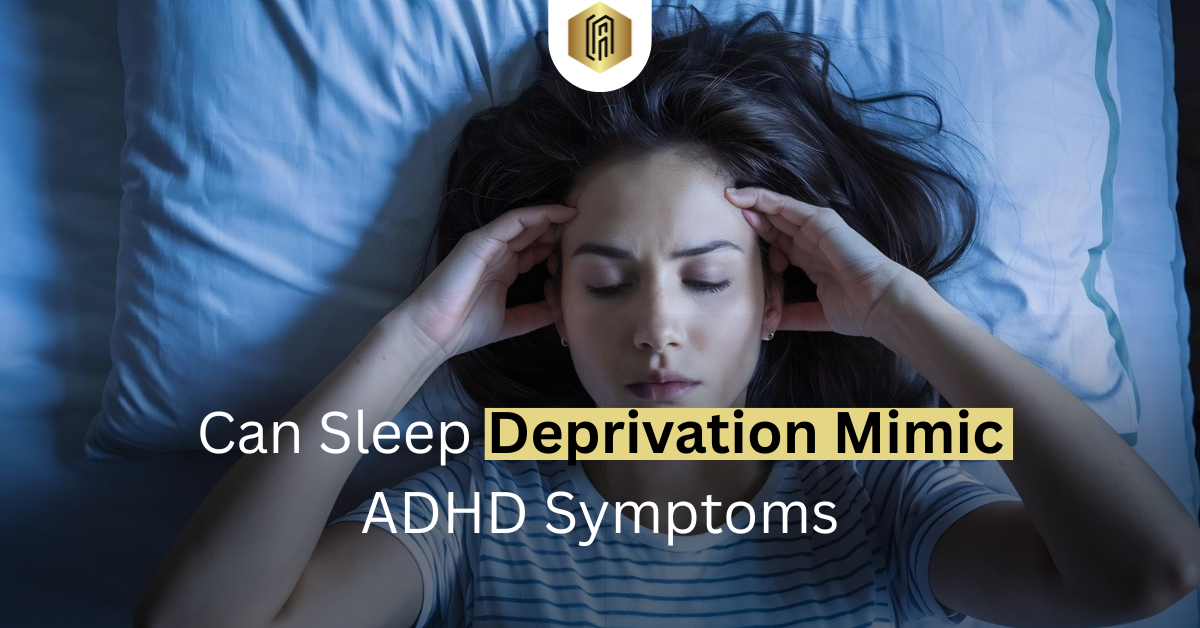
Have you ever experienced having trouble concentrating, being restless, or being easily annoyed following several poor nights’ sleep? It may begin to get confusing, more so when such patterns resemble ADHD to a great extent.
Yes, sleep deprivation may replicate ADHD. Sleep deprivation may also influence the ability to focus, recall, hold impulses, and have a mood, making it hard to discern whether the problem is ADHD or a lack of sleep.
This overlap is more prevalent than you might think, and knowing it can assist you in making the right next step with a better idea.
Why This Question Comes Up So Often
Most individuals start experiencing attention issues during stress, hectic schedules, or following frequent late nights. Children can have difficulties with school work, and adults find it more difficult to remain organized or get things done.
Since these changes may be unanticipated, it is only natural that one might question whether ADHD is developing or whether sleeplessness is becoming more significant.
How Sleep Deprivation Affects the Brain
Sleep plays a crucial role in the way the brain renews concentration, controls emotions, and processes information. These systems fail to work as well when sleep is interrupted or reduced.
You might experience:
- Slower thinking
- Difficulty concentrating
- Increased irritability
- Reduced motivation
The brain begins to act as though it is strained in most ways, like what is observed in ADHD.
Common Symptoms That Overlap with ADHD
ADHD (Attention-Deficit/Hyperactivity Disorder) is a condition that affects focus, impulse control, and activity levels, often starting in childhood and continuing into adulthood.
Sleep deprivation and ADHD might appear quite similar in real life. There are common overlapping symptoms, such as:
- Inability to concentrate on activities or discussions
- Restlessness or fidgeting
- Memory loss or forgetfulness
- Trouble staying organized
- Bad temper or emotional fluctuations
- Poor motivation or exhaustion of the mind
It is these common symptoms that can cause confusion.
How to Tell the Difference
The symptoms can be similar in nature, but the causes vary. To see the difference, you can pay attention to some of the main trends:
- Sleep-related symptoms: They usually get better with rest, whereas the symptoms of ADHD are more predictable.
- Sleep problems can be acute and occur abruptly, particularly when someone is under stress or during a change of lifestyle.
- Symptoms of ADHD tend to start at a younger age, and in most cases, when one is a child.
These are not guidelines, but they may assist in informing your knowledge.
What High-Functioning Sleep Deprivation Can Feel Like
Sleep deprivation is not necessarily intense. Most of them are also mentally exhausted as they carry on with their daily activities. You might:
- Go through the day on autopilot
- Difficulty making simple decisions
- Feel wired and fatigued
- Observe that work is harder than normal
The fact that you are still operating makes it simple to ignore the root cause, which is sleep.
Practical Steps to Improve Sleep and Focus
Sleep and attention can be impacted by little changes. Helpful steps include:
- Establishing a regular sleep and wake schedule
- Limiting the use of screens at night
- Establishing a peaceful night routine
- Receiving daylight in the morning
- Tracking how your focus changes after better sleep
These measures can assist you in determining whether sleep is making a big contribution.
When to Seek Professional Support
When the symptoms persist even after you have gotten better sleep or you are not certain what is causing the symptoms, it is time to seek professional advice. A mental health provider can:
- Assess sleep patterns and attention issues
- Assistance in distinguishing ADHD and sleep disorders
- Suggest individualized options of treatment
Being clear early can save you a lot of needless stress and will enable you to move on with confidence.
Can Sleep Deprivation and ADHD Exist Together?
Yes, it’s possible to experience both. Sleep problems can worsen ADHD symptoms, making focus and emotional regulation even more difficult.
That’s why addressing sleep is often an important part of managing attention-related challenges.
How Ascension Psychiatric Services Can Help
When in doubt about whether you are sleep deprived, have ADHD, or a combination of both, professional advice would make the difference.
At Ascension Psychiatric Services, you do not have to guess, but instead, evaluations are made by considering your sleep patterns, daily routines, and attention issues. Care is not a one-size-fits-all approach, but it is tailored to what you are actually going through.
You can talk about your issues from the comfort of your house and have access to help that matches your schedule through convenient virtual appointments. The aim is to make you feel clearer, more balanced, and in control of your day-to-day life, whether your focus is on helping you sleep better, overcome attention problems, or both.
Key Takeaway
Sleep deprivation may closely resemble symptoms of ADHD, such as lack of concentration, restlessness, and irritability. Nonetheless, the two are different, and it is worth knowing the reason behind this to select the appropriate support.
Conclusion
Sleep deprivation may cause one to experience that something bigger is at play, even in circumstances where one cannot concentrate, has mood swings, and lacks vitality. However, in most situations, better sleep can result in a tangible relief.
When these trends resonate with you, you do not need to work it out by yourself. With the correct support, you can realize what is actually going on and take significant actions that can lead to improved focus and health.
You can also explore our related article:
Is Your Sleep Loss Caused by Stress or Something Else?
FAQs
Can lack of sleep cause ADHD-like symptoms?
Yes, sleep deprivation can induce effects of impairment of focus, memory, and mood in a manner that is rather similar to ADHD.
Will symptoms improve if I get better sleep?
In many cases, yes. Improved sleep often leads to better concentration and emotional balance.
How do I know if it’s ADHD or sleep deprivation?
When the symptoms are relieved by rest, sleep might be the primary cause of the symptoms. ADHD might require assessment in case it continues in the long-term.




No comment