
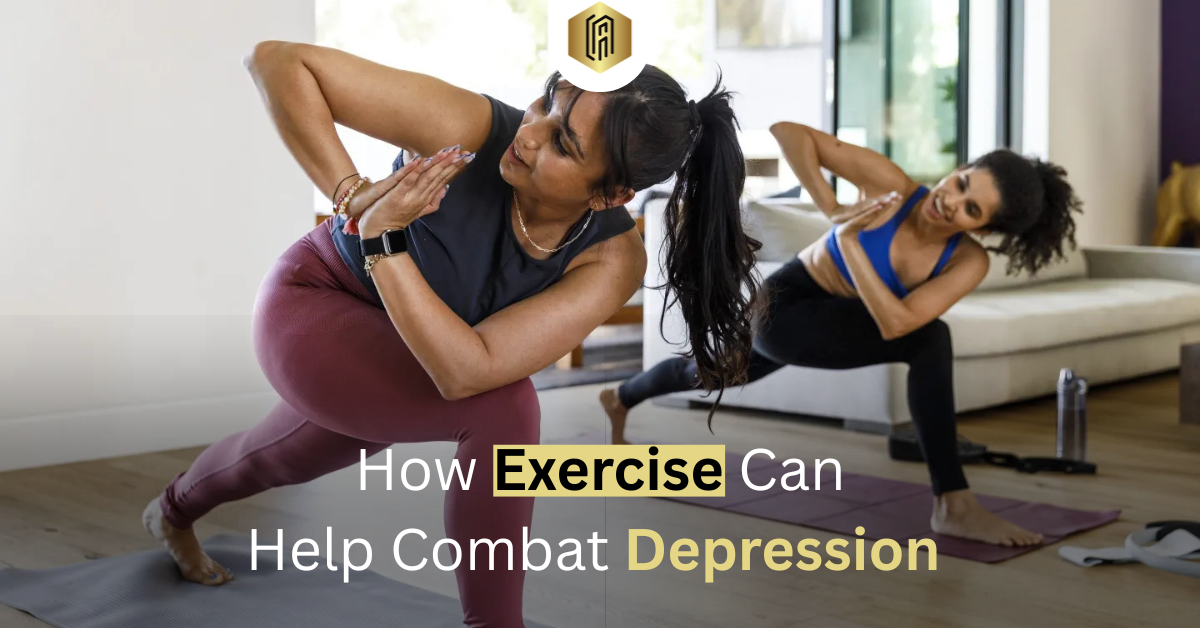
Imagine yourself going for a walk outside in the morning and feeling the fog in your head start to lift. It’s not a random change; your brain is reacting to the movement.
Depression doesn’t just make you sad. It is a medical condition that can leave you tired, keep you from sleeping, make it hard to focus, and even make simple tasks seem impossible. Millions of adults in the U.S. have major depressive disorder or other types of depression every year.
The good news? Regular exercise might be a great way to improve your mental health. We’ll talk about how exercise can help with depression, what kinds of workouts are best to try, and how to get started even when you don’t feel like it.
The Real Connection Between Movement and Mood
Everyone experiences depression in their own way, but some signs that are often seen are:
- Not liking or being interested in things anymore
- A bad mood that doesn’t go away easily
- Being tired even after getting some sleep
- Not being able to sleep or sleeping too much
- Changes in appetite or weight
- Can’t focus or choose what to do
It can be major depressive disorder (severe episodes), seasonal affective disorder (getting worse in the winter), or postpartum depression (after giving birth). It doesn’t matter what kind it is; it’s not a sign of weakness. It’s a health issue that needs to be cared for and understood.
How Movement Changes the Brain and Body
When you move, your body releases endorphins, natural chemicals that act like built-in mood boosters. Exercise regularly also helps lower inflammation, encourages the growth of new brain cells in areas that control mood, and keeps stress hormones like cortisol in check.
One of the best things about exercise that people don’t talk about enough is that it makes you stronger. You are telling your nervous system, “I can handle pain and come out the other side,” every time you take a short walk or do a gentle stretch. That gives you emotional strength over the weeks and months, making it easier to get through hard days.
Harvard and other top schools have conducted research showing that regular exercise improves sleep, reduces anxiety-like symptoms, and creates a positive feedback loop for mental health.
The Most Helpful Benefits for People Facing Depression
Here are some real ways that working out can help:
- Quickly makes you feel better: Many people feel better after just one session of moderate exercise.
- Fights tiredness: It slowly builds up your stamina, so you don’t feel as tired over time.
- Clears brain fog: Moving around helps you remember things, focus, and break out of negative thought loops.
- Helps you make friends: Walking with a friend, playing with kids, or taking a class can help you feel less alone.
- Prevents you from having more episodes in the future: Having regular habits makes you stronger emotionally overall.
Real-Life Moments That Show the Difference
Picture a tired parent tossing a ball around in the yard. What starts as “just 10 minutes” quickly turns into laughter, sunshine, and a memory that will last a lifetime. These times show us that family time doesn’t have to be serious or planned. Simple active play is good for your health and brings the whole family together, making everyone feel good.
Best Types of Movement for Depression
Aerobic (Heart-Pumping) Activities
You can walk quickly, ride a bike, swim, or even dance in your living room. These gradually raise your heart rate and help your body make more serotonin and other mood-stabilizing chemicals.
Do what you can, and then move on to the next thing. Most days, even 10 to 15 minutes can help.
Strength-Based Movement
You can work out at home with bodyweight exercises like squats, wall push-ups, and resistance-band rows, or use light weights. These things help you feel better about your body, which often enables you to feel better about your mind as well.
You don’t need a gym; working out regularly is more important than how hard you do it.
Mind-Body Practices
Tai chi, yoga, or light stretching with deep breathing. These relax the nervous system and work out the body at the same time, which helps calm racing thoughts and lower stress.
Enjoyable, Low-Pressure Options
Gardening, dancing to your favorite songs, or playing tag with kids are all fun things to do. When moving feels like fun instead of work, you’re more likely to keep going.
Weekend bike rides or backyard games are fun for the whole family and make exercise less of a chore.
How to Actually Get Started (Even When You Feel Stuck)
- Begin with a minimal amount of time, like 5 to 10 minutes. The goal is to get things going, not to be perfect.
- Pick something you really like. Do you enjoy music? Dance. Do you like the outdoors? Go outside for some fresh air. Don’t like working out? Stay inside.
- Do it on top of something you already do, like walking after dinner or stretching while your coffee is brewing. This will make it a habit.
- Write down how you feel and pay attention to it. A simple note like “Walked 12 minutes, felt 20% lighter afterward” shows that it works.
Important Safety Notes
Talk to your doctor or mental health professional before you start, especially if you have health problems or are very depressed. Take your time. Steady, delicate beats intense and short-lived.
Handling the Biggest Roadblocks
“I Have Zero Motivation”
Break it down into small steps:
- Put on your shoes.
- Go outside for two minutes.
- After that, enjoy your favorite song, coffee, or other things.
Motivation gets stronger the more you use it, even in small ways, just like a muscle.
“I’m Too Tired / Don’t Have Time”
Pick short bursts of activity, like a 10-minute bodyweight circuit or a walk. Make a part of your daily life by stretching during TV commercials and walking around while you talk on the phone. Ask a friend or family member to come with you; it becomes more than just a workout.
“Weather Is Bad / I Feel Worse Some Days”
If you can’t go outside, try marching in place, doing yoga, or watching dance videos on YouTube. When things are hard, be nice to yourself. Even a little bit of stretching is a step forward. Think of it as self-compassion instead of failure.
Pairing Movement with Professional Support
Exercise works better when it’s part of a bigger plan. It works with medication, changes in lifestyle, therapy (like cognitive behavioral therapy), and help from people who know what it’s like to be depressed.
If you’re still feeling down, unmotivated, or hopeless, get in touch. Ascension Psychiatric Services can help you come up with a personalized plan by combining therapies that have been proven to work with advice on how to move.
Clearing Up Common Myths
The idea that “I need to work out hard to see results” is a myth. The truth is that moving around gently and regularly usually works just as well, and sometimes better, for mood.
“Working out will completely get rid of my depression” is a myth. It’s a great tool, but most people get the best results when they use it with other tools.
Myth: “I’m not fit enough to begin.” The truth is that everyone has to start somewhere. Movement meets you where you are.
Final Thoughts
Moving around isn’t a miracle cure, but it’s one of the easiest and most scientifically proven ways to improve your mental health. It makes you feel better, stronger, and more connected to other people. Plus, it gives you small wins that add up.
You don’t have to change every part of your life. You can start by walking for a short time, stretching, or dancing to one song.
If you need extra help, like making your routine better or adding movement to your professional treatment, we’re here for you. Contact us and take that first small step today. Things get better when you make one small change at a time.
Related Reading:
FAQs
Can exercise replace medication or therapy?
No, but it can help both work better. Every time, talk to an expert about your situation.
How long until I feel a difference?
Some people notice a difference in just a few days or weeks. Being consistent is the best way to make long-lasting changes.
What if I have almost no energy?
Begin with five minutes. Even standing up and moving to music counts. Most of the time, the next thing is momentum.
Is it safe for kids or teens who are showing signs of depression?
Yes, but only with guidance. Instead of strict “exercise,” do fun, supervised activities that get you moving, like games, riding, and dancing.





No comment